

How RF Congestion Complicates Drone Detection
RF congestion occurs when the radio spectrum in a given area is crowded with signals from Wi-Fi networks, cellular infrastructure, IoT devices, and other consumer and commercial electronics. This raises the background noise level that a detection system must filter through to specifically identify a drone's signal. As drone adoption and wireless device density both increase in tandem, RF congestion has become a growing factor in detection system design rather than an outlying case
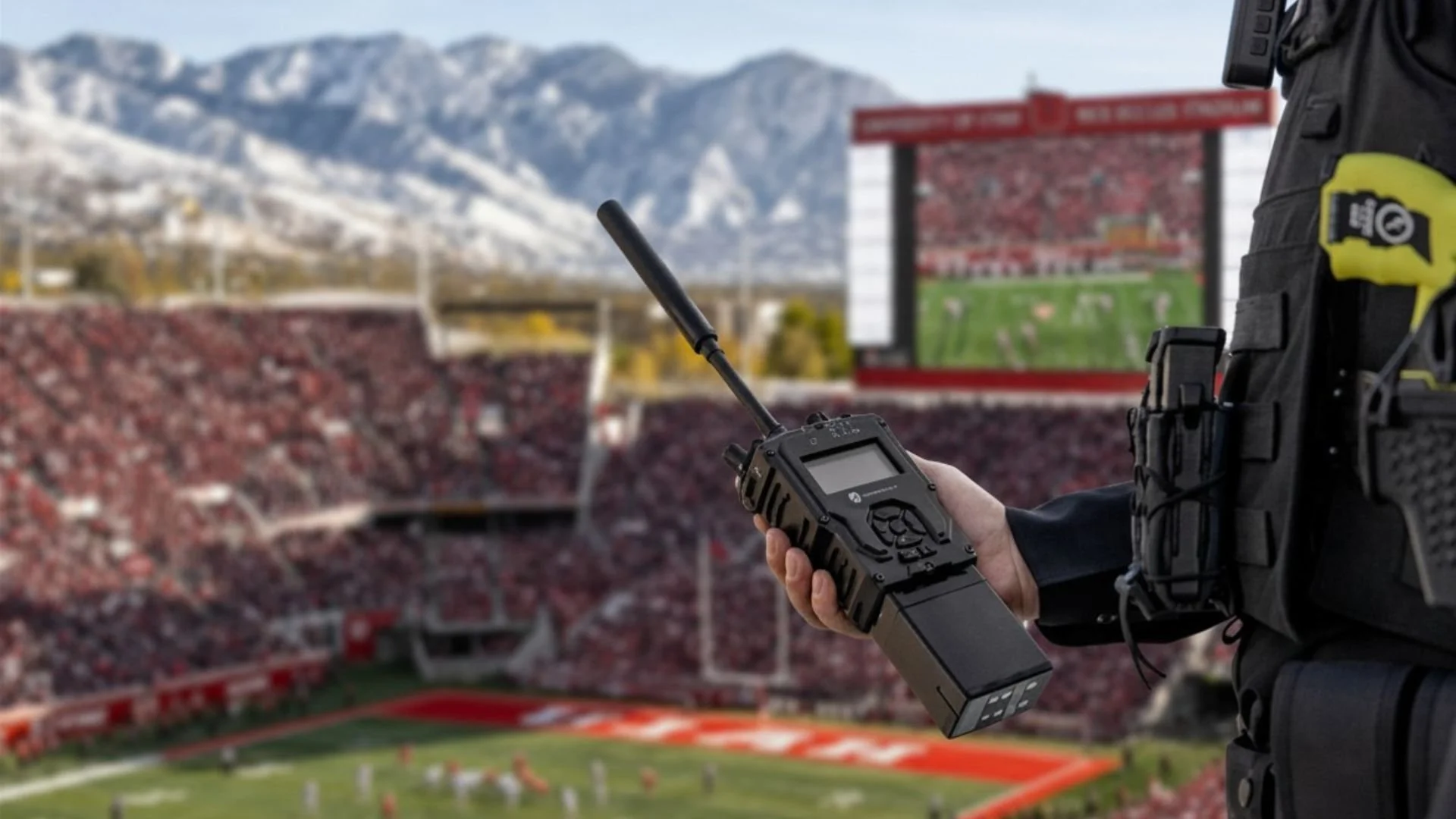
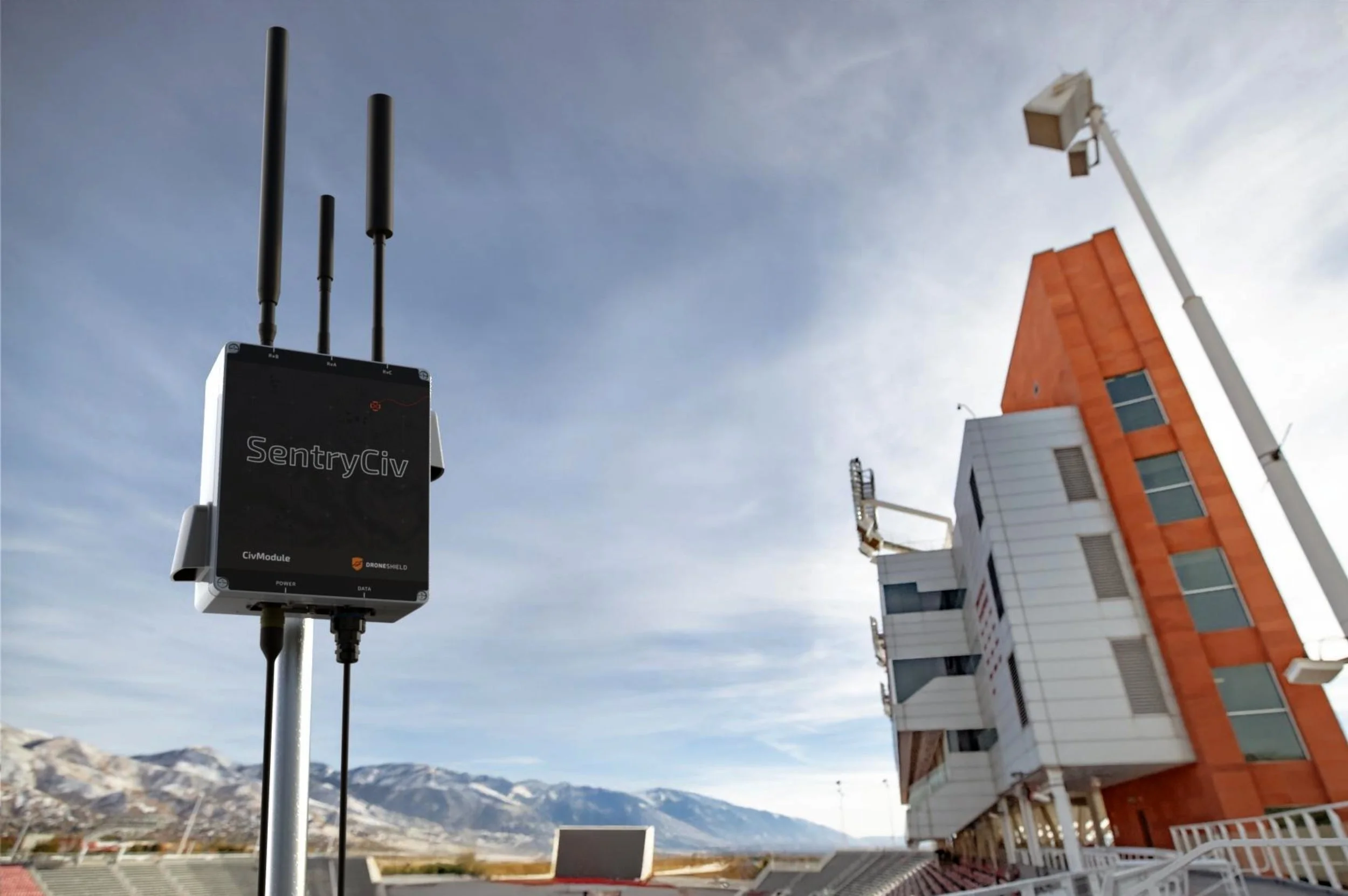
At the 2026 FIFA World Cup in Kansas City, DroneShield's RF detection architecture operated in one of the most demanding RF environments a counter-UAS system can face. Packed stadiums and urban zones inundated with tens of thousands of personal devices, dense cellular infrastructure, and a layered blanket of Wi-Fi and Bluetooth activity across every frequency band drones commonly use. The system still detected 184 drones across the deployed sites, with 48 seizures made.
Detecting drones in RF congested areas like the FIFA environment isn't a sterile best-case laboratory stress test. It's the real-world operational baseline.
What Causes RF Congestion in Drone Detection?
The radio spectrum is a finite resource shared between every wireless device operating in a given area.
Consumer drones typically communicate with their controllers on the same frequency bands used by Wi-Fi routers, Bluetooth devices, and cellular networks. A detection system monitoring those bands in a dense environment isn't looking for a drone signal in clean space. It's searching for it inside a continuous barrage of competing emissions.
A single apartment building generates hundreds of concurrent Wi-Fi signals. A stadium event adds thousands of cellular connections, Bluetooth audio devices, and mobile hotspots. Smart building infrastructure, vehicle communications systems, and industrial IoT equipment compound the problem further. Each of these sources raises the noise floor, or the baseline level of RF activity a detection system must contend with to sense a drone signal before it can be identified.
Wireless device density is ballooning faster than spectrum allocation policy can accommodate it, and drone adoption is accelerating in parallel. A detection system that performs adequately in today's RF environment may operate below its performance threshold in the same location five years from now, while the density of drone traffic and detection difficulty increases.
Why a Crowded Spectrum Makes Drone Signals Harder to Isolate
Drone signal RF interference degrades detection performance in two distinct ways.
The first is masking. When background RF activity is dense enough, a drone's control link signal can be buried beneath the noise floor, making it almost invisible to a system that isn't specifically designed to extract it.
The second is false positives. Signals from non-drone devices that share frequency characteristics with drone control links can trigger false alerts in systems without sufficiently precise classification.
Both types of counter-drone detection failure modes come with operational costs.
Masking means drones that should be detected aren't. False positives mean operators receive alerts they learn to distrust, which erodes response confidence over time. In a high-stakes environment, these failures are unacceptable. The problem is that in a high-congestion environment, both of these failure risks are elevated simultaneously.
Signal-to-noise ratio is the main technical measure of this challenge. A strong drone signal in a quiet environment produces a high signal-to-noise ratio, meaning it’s easy to detect and classify. The same drone signal in a congested environment produces a lower ratio, requiring the detection system to work harder and smarter to isolate and confirm the same drone proximity event. Urban environments, event venues, airports, and critical infrastructure sites all compress signal-to-noise ratios in ways that open-field test environments don't replicate.
How Modern Solutions Filter Signals From Noise
Interference filtering in counter-UAS RF systems operates at two levels.
The first is hardware, including antenna design, receiver sensitivity, and spectrum coverage. These RF sensor attributes all affect how cleanly a drone signal can be sensed in a noisy environment.
A narrow-band system optimized for specific frequencies will inherently lose performance in environments where drone operators use non-standard or frequency-hopping control links. This kind of detection-avoidant behavior in drones must be increasingly expected.
Ultra-wide band sensing from solutions like the RfRecon provides far broader coverage and is more robust against congestion because it monitors across a wider portion of the spectrum simultaneously, rather than sampling narrow windows.
The second level is software. AI-assisted signal classification, like RfAI-3, is now the primary mechanism for separating drone signals from background RF noise in congested environments. Rather than comparing detected signals against a simple signature match, advanced classification models analyze the behavioral characteristics of signals, how they modulate, how they change over time, and what protocol structure they exhibit. This allows for highly confident drone characterization.
A drone control link behaves differently from a Wi-Fi router even when both operate on the same frequency, and a trained, AI-powered classification model can make that distinction reliably where a threshold-based system cannot.
This is where the RF environment counter-UAS capability gap between vendors becomes extremely significant. A detection system that performs at a quoted detection range in an open field may deliver meaningfully lower performance in a congested urban environment if its filtering and classification architecture wasn't designed with a crowded spectrum in mind or is simply too unevolved to do so. Counter-drone operators in the real world must evaluate systems against congested RF conditions, not just clean environments.
What Happens When Congestion Is Not Accounted For?
Detection systems that don't account for RF spectrum crowding in their architecture produce predictable failures.
False alert rates climb as non-drone signals trigger classifications, operators begin dismissing real alerts as noise, and genuine detections get missed or delayed. The cumulative effect is that the security team's confidence in the system erodes and the detection layer stops functioning as intended.
This isn't a hypothetical failure. It's the expected outcome of deploying detection solutions specified for low-congestion environments into high-congestion operational sites. The gap between test-range performance and operational performance is wider in RF-congested environments than in almost any other variable because congestion directly attacks the signal-to-noise ratio that detection depends on.
Signal noise will continue to increase as wireless device use grows and adversarial drone operators will continue to deliberately exploit this congested spectrum to mask drone activity. Detection architecture that treats RF congestion as a manageable part of normal counter-UAS operations, rather than an edge case, needs to become the baseline
Frequently Asked Questions About RF Congestion
Q: What causes RF congestion in drone detection?
A: RF congestion comes from the combined radio activity of Wi-Fi networks, cellular infrastructure, IoT devices, and other wireless equipment operating in the same general spectrum as many drones. Dense environments like stadiums, airports, and urban centers generate the highest congestion levels.
Q: Is RF congestion getting worse?
A: Spectrum congestion is generally increasing as both drone adoption and the number of connected wireless devices grow, which makes interference filtering an increasingly important design factor for counter-UAS detection systems.
Q: How do detection systems filter drone signals out of RF noise?
A: Systems typically combine ultra-wideband spectrum monitoring with AI-assisted signal classification that analyzes signal behavior rather than simple frequency matching. This allows the system to distinguish drone control links from other devices sharing the same frequency bands.
Evaluating Detection Performance in Congested Environments
The performance gap between a detection system tested in open-field conditions and one evaluated in a congested RF environment is one of the most reliable predictors of operational failure. Teams specifying counter-UAS detection for high-density sites should test and evaluate against congested conditions, not just quoted range specifications.
Teams assessing RF detection architecture for congested or complex operational environments can request mission-specific support from the DroneShield team: https://www.droneshield.com/connect-with-us