

Why Urban Environments Make Drone Detection Difficult
Urban drone detection challenges arise from three major compounding factors: physical obstructions, dense radio frequency activity, and shorter reaction windows. No single sensor type handles all three equally well. Effective drone detection in urban environments typically requires multiple sensor types working in combination.
That challenge isn't hypothetical. During the opening weeks of the 2026 FIFA World Cup, authorities across US cities detected over 300 unauthorized drones in congested urban areas surrounding match sites. The unprecedented challenge of implementing comprehensive airspace security in metropolitan areas and cities is a template for future counter-drone solution requirements.
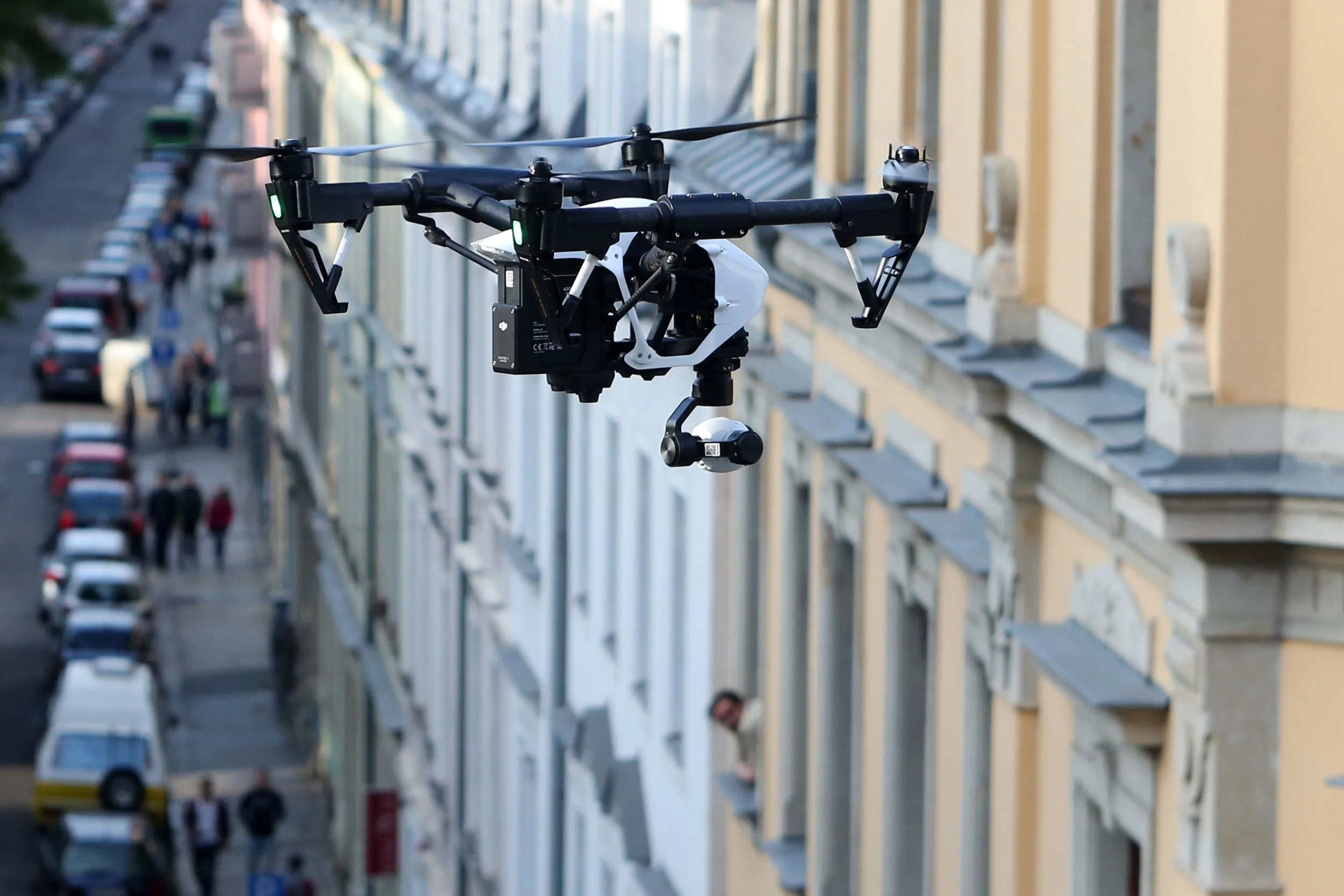
Why Is Drone Detection Harder in Cities?
Cities combine three detection challenges that in other operating environments are usually encountered separately, if at all, in open terrain.
Physical obstructions that create blind spots and signal shadow zones
High levels of RF activity from commercial, residential, and public infrastructure
Reduced warning times caused by dense building geography and shorter engagement distances
Each factor affects detection performance differently. Together, they create one of the most demanding environments for counter-drone operations.
The Physical Problem: Buildings, Shadow Zones, and Broken Line of Sight
Unlike radar or optical systems, RF detection doesn’t necessarily rely on perfect physical lines of sight to pick up the signature of a drone. Because RF detectors listen for tell-tale electromagnetic communication between the UAS and controller, they have the capacity to sense platforms and operators behind buildings or beyond dense foliage.
The Advantages of RF Detection in Urban Environments
RF detection methods benefit from several physical attributes to overcome barriers and physical urban congestion.
Signal Diffraction. Radio frequencies utilize longer wavelengths than visible light or radar beams. These elongated waves naturally bend, or diffract, when hitting solid edges, allowing the signal to wrap around building corners and roll over geographic terrain rather than being blocked entirely.
Material and Canopy Penetration. Visual systems fail when light is blocked, but RF energy can travel directly through non-conductive materials. Signals pass through standard construction elements like wood, drywall, and glass, and can filter through dense foliage.
Multipath Signal Scattering. Radio waves ricochet off surrounding surfaces like asphalt, vehicles, and metal structures. RF detection software can capture these scattered ambient echoes and reconstruct the data to detect a drone's presence even when the primary direct signal is obstructed.
RF Detection Challenges in Urban Environments
However, these positive attributes don't mean that detection accuracy, signal confidence, and range aren't affected by city contexts. Physical barriers still pose serious urban drone detection challenges.
Signal Attenuation. Solid materials like metal absorb and weaken RF signals. A dense concrete building will block or degrade the signal far more than a glass window or sparse tree coverage, reducing signal detection range.
Multipath Propagation. RF signals bounce off hard physical surfaces like buildings and metal structures rather than traveling in a perfectly straight line. This creates multipath effects where the signal arrives at the sensor from multiple directions, which can distort the accuracy of detecting a drone's location.
Penetration Variability Across Frequency Bands. Various UAS platforms operate on different RF frequencies, which means they also penetrate barriers differently. Standard consumer drones primarily broadcast on 2.4 GHz or 5.8 GHz. Lower frequencies like 900 MHz can penetrate physical barriers more easily than higher frequencies, creating variable detection signatures depending on the platform.
Signal Shadow Zones. If a drone is completely shielded by a massive physical barrier like a large building or imposing metallic structure, the RF signal may be entirely blocked before it can reach detection antennas.
For drones that don't comply, can't be confirmed, or are deliberately spoofing their broadcast, drone signal detection takes over by identifying the aircraft from its own radio emissions rather than a self-reported signal. This happens in three stages.
The Signal Problem: RF Noise from Everyday Urban Infrastructure
RF drone detectors can struggle to pinpoint UAS activity in dense city environments because they're operating amid a cacophony of background radio signal noise, all competing for attention and masking genuine UAS signatures and patterns.
Every city block functions as a massive, continuous emitter of electromagnetic interference. This invisible clutter creates a dense noise floor that can easily swallow the weak transmission of an airborne drone, presenting a significant hurdle for standard airspace security solutions.
In cities, millions of consumer devices compete for the same unlicensed frequency bands that drones use:
Commercial and residential Wi-Fi fills high-rise buildings with constant data streams
Powerful 4G and 5G base stations generate intense local electromagnetic fields
Automated utility grids and smart building management systems add a persistent background hum
RF interference in cities has no equivalent in suburban or rural environments and has ramifications for detectors that rely on cataloged UAS signatures to identify drone activity. RF clutter in drone detection deployments makes legacy signature libraries insufficient.
Effective filtering and UAV detection in such complex spaces requires next-generation AI software capable of advanced signal classification. It also requires the intelligence necessary to tune a counter-drone solution to match its operating environment. The background noise profile of a dense financial district differs from that of an urban stadium on match day, and a system calibrated for one will underperform in the other without deployment-specific adaptation.
The Timing Problem: Shorter Standoff Distance, Less Time to Respond
Urban environments shrink a security team’s reaction window to a detected airborne platform because physical structures reduce the distance at which a drone can first be detected.
In open terrain, longer range detection provides crucial decision time. A drone acquired a kilometer out gives a security team time to classify the aircraft, confirm intent, consult response authority, and then act. That response window is one of the most operationally valuable things a detection system can provide.
In a city, this early detection scenario collapses. Buildings can limit effective sensor range, and a drone can approach a target by flying between structures and staying in shadow zones until it's already inside the perimeter of what it's threatening.
The math here spells out the issue. A drone traveling at approximately 15 meters per second clearing a building 150 meters away leaves a security team roughly 10 seconds before it reaches its target, after which detection, classification, confirmation, and response must all occur.
That's not the timeline most conventional response protocols are designed for, and it carries weight, from limiting the effectiveness of defensive measures to putting pressure on coordination and increasing collateral risk.
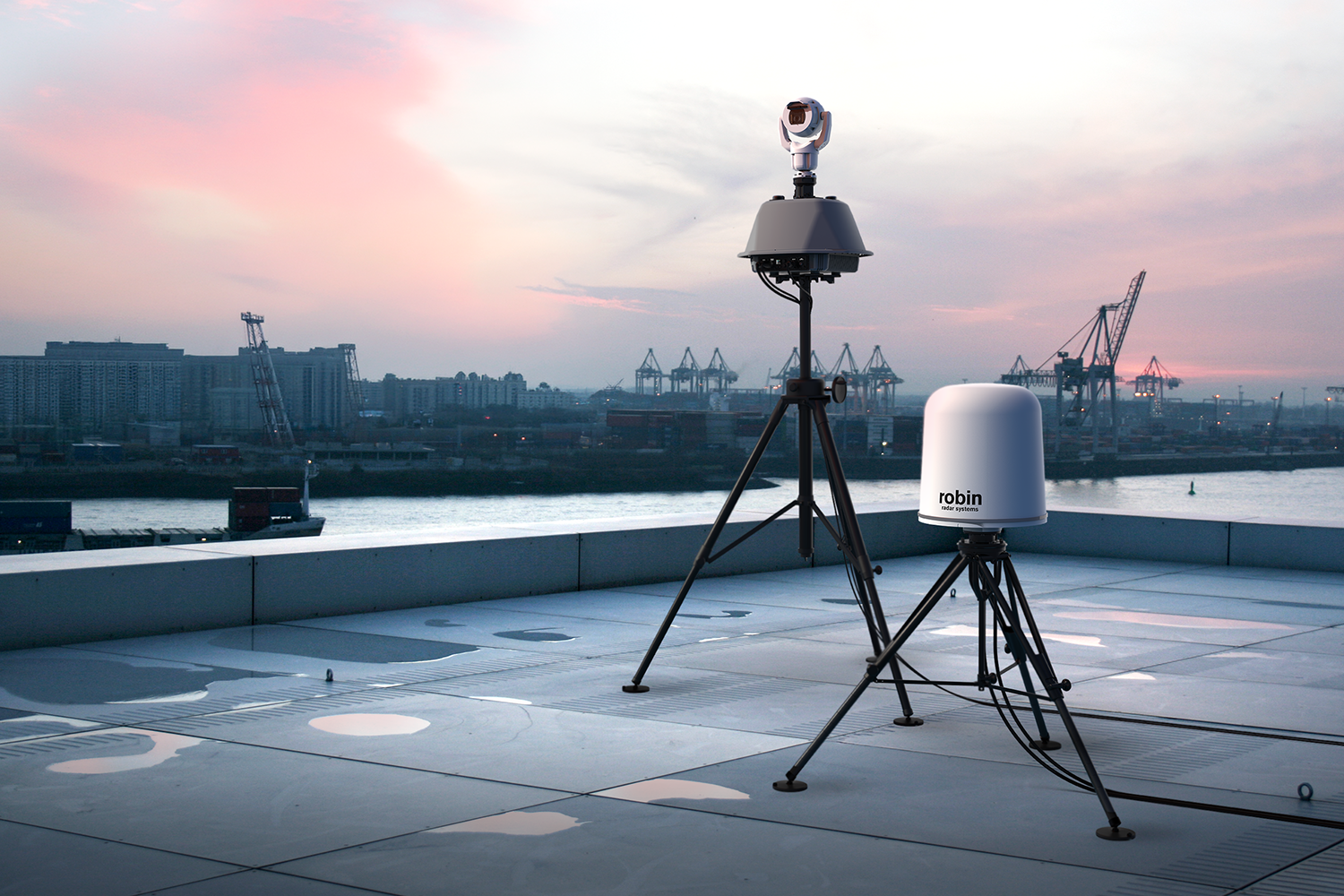
These constraints pose significant challenges that can be mitigated in part with smart deployment decisions, automation, and pre-planning. Rooftop-mounted and dispersed detector nodes can help mitigate shadow zones through optimal angles and locate UAVs more accurately through multi-sensor triangulation, while automated persistent detection ensures round-the-clock coverage. Comprehensive C2 software, sensor fusion, and strategically added radar and optical sensors can enhance detection where lines of sight are available.
Why Single-Sensor Systems Struggle in Dense Environments
Compared with line-of-sight dependent radar and optical sensors, or audio sensors requiring relative quiet, RF detection remains the best suited to urban environments. It doesn't depend on line-of-sight, it works passively without broadcasting the presence of the detection system, and it can reach around the obstructions that stop cameras and radar arrays. In many urban deployments, RF detection is the only sensor that can acquire a drone before it's already visible overhead.
The difference is that while urban environment UAS detection challenges are significant, success comes down to the nature of the solution. A next-generation ultra-wideband detector, paired with advanced AI software, built by manufacturers with deep experience and industry knowledge will significantly outperform legacy out-of-the-box systems in city environments.
While physical barriers aren't a dealbreaker for RF, the technology has a different major constraint: it only detects drones that are actively emitting signals. If a drone is flying autonomously along pre-programmed GPS waypoints with no active radio emissions, RF sensors will be blind to its presence. In dense urban environments where reaction times are already compressed, that blind spot is operationally significant.
Thorough counter-drone urban airspace coverage, including no-link autonomous platforms, requires a layered architecture: RF detection providing the signal intelligence layer, paired with physical detection from radar and visual confirmation from EO/IR. Each sensor's urban-specific weakness is offset by the others' strengths, and the fused operating picture is more complete than any single sensor can produce. Urban airspace security built on one sensor type alone leaves a gap that can be exploited in urban environments.

Frequently Asked Questions About Urban Drone Detection
Q: Why is drone detection harder in cities than in rural areas?
A: Dense buildings block line-of-sight and create signal shadow zones, while RF noise from Wi-Fi, cellular, and other devices raises the background interference detection systems must filter through. Cities also compress reaction windows because drones are already close to people and assets before they're first acquired.
Q: Can a single sensor type reliably detect drones in urban environments?
A: RF detection is the strongest single-sensor option in cities because it doesn't require line-of-sight and works passively. But no single sensor covers all scenarios, including autonomous no-link platforms, which is why layered multi-sensor detection performs better in dense environments than any individual technology alone.
Q: Does RF noise from Wi-Fi and cellular networks interfere with drone detection?
A: Yes. The dense wireless infrastructure of cities raises the RF noise floor significantly, making it harder to isolate a drone's signal without deployment-specific signal classification capable of filtering that background noise accurately.
Assessing Urban Drone Detection Coverage
Urban environments don't just challenge detection solutions, they expose the assumptions those systems were built on. A sensor deployment that works in an open environment can fail in a city center because the dense airspace environment has changed the variables it was calibrated for.
Understanding those variables, RF noise profile, building geometry, sensor placement, and the specific threat mix of autonomous versus controlled platforms, is the prerequisite for counter-drone coverage that performs when it needs to.
Airspace security teams can connect with DroneShield to discuss the specific urban drone detection challenges their environment presents: https://www.droneshield.com/connect-with-us