

What Is RF Drone Detection, and How Does It Work?
Radio Frequency (RF) drone detection works by intercepting the radio signals exchanged between a drone and its controller, then analyzing those signals to detect presence, classify the UAS (unmanned aerial system), and estimate its direction or location. Because it doesn't require line of sight or create active emissions of its own, RF detection supports continuous, passive monitoring across a broad operational area.
That capability isn't theoretical. At the FIFA World Cup, 2026, DroneShield and security teams in Kansas City detected 184 drones flying in restricted airspace around the stadium and adjoining fan zone. The detection layer behind that response combined RF-based drone detection, radar, and coordinated situational awareness across the operational area, the kind of deployment a security team builds before an incident, not after one.

DroneShield technicians testing detection capabilities at the company's facility.
What Is RF Drone Detection?
Radio frequency drone detection is a method of identifying UAS by capturing and analyzing the radio signals a drone transmits or receives, rather than by tracking its physical shape, visual profile, heat signature, audio emissions, or movement.
Most consumer and commercial drones communicate near-constantly with a ground controller, exchanging command instructions, telemetry, and live video. That exchange emits a radio frequency signature distinct enough to separate a drone from the often-present background spectrum noise.
A counter-drone RF detector scanning the relevant frequency bands can capture this activity. Specialized signal processing software then compares the detected signal against a library of known drone signatures to confirm that a UAS, rather than some other RF source, is present.
Next-generation detection engines such as RfAI-3 go beyond the catalog, and are capable of detecting and characterizing drones that have never been encountered before.
Because RF detection depends on a drone transmitting in the first place, it works without emitting any signal of its own. This passive characteristic is one of its defining advantages over systems like radar, which must actively send out a signal and wait for a return, broadcasting its own presence and location. This is particularly important in military and security operations, as an RF detection solution doesn't announce its presence to other parties.
How Does RF Drone Detection Work?
RF drone detection technology works via two complementary methods: reading a drone's Remote ID broadcast directly when one is available and analyzing its raw radio emissions through spectrum sensing when it isn't.
Method 1: Reading the Remote ID Broadcast
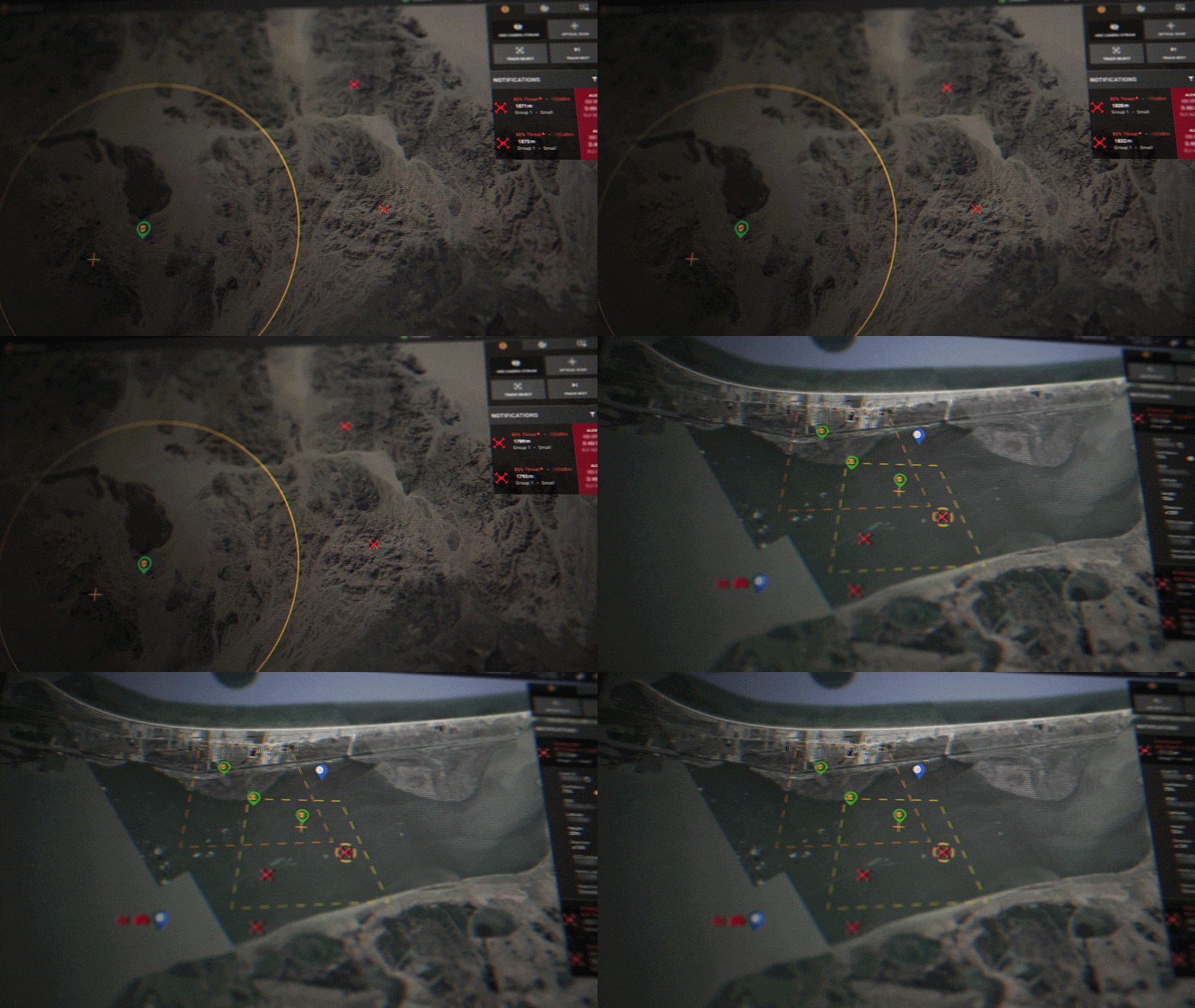
In most major jurisdictions, including the United States and the EU, drone regulations now require consumer and commercial drones to broadcast identification, GPS position, altitude, and operator location over Wi-Fi or Bluetooth. Where that broadcast exists, a compliant drone detection solution reads it directly, providing a dot-on-map location for both the drone and the operator, with no signal analysis required. The broadcast is not necessarily authenticated, so receiving one confirms what the drone is reporting, not that the data is accurate. Exemptions are common too, small recreational drones below a weight threshold, designated flying areas, and any operator willing to disable or spoof the signal all fall outside its coverage.
Method 2: Spectrum Sensing
For drones that don't comply, can't be confirmed, or are deliberately spoofing their broadcast, drone signal detection takes over by identifying the aircraft from its own radio emissions rather than a self-reported signal. This happens in three stages.
1) Signal Capture
A network of antennas, often housed in a single node or unit, scans the RF spectrum across the frequency bands drones commonly use, including common command-and-control links and video downlink, typically in ranges such as 2.4 GHz, and 5.8 GHz. Most modern capable drone detector solutions will monitor multiple bands at once, since drone manufacturers don’t standardize on a single frequency. As drones become more advanced, DIY platforms move toward frequency hopping, and potentially nefarious actors move to avoid known frequencies, signal capture methods need to advance. Next-generation counter-drone RF detectors utilize ultra-wide band abilities to discover such drones if they attempt to hide from traditional RF detection approaches.
2) Signal Processing
Once a potential drone signal is detected, software analyzes its waveform characteristics, modulation pattern, and timing structure. These properties are compared against a continuously updated signature library to determine whether the source is a drone and, if so, which type. Next-generation signal processing leverages advanced AI learning models to be able to detect drones with a high degree of accuracy without requiring the platform to be catalogued as a known UAS, representing a leap forward in counter-drone detection.
3) Direction-Finding
A confirmed signal becomes a precise RF emitter detection at this stage, and the method depends on the detector solution and how a system is deployed. Not every deployment includes this capability at all. A sensor without a direction-finding antenna can detect and classify a signal but has no way to resolve where it’s coming from, which is a deliberate tradeoff some deployments make for simplicity, portability, size, or cost. A single sensor equipped with a directional antenna can resolve a bearing (the angle a signal is arriving from), which is enough to tell an operator from which direction a threat is approaching. A network of sensors takes it a step further. By comparing the angle or arrival timing of the same signal across multiple locations, using command-and-control software, the network can triangulate the emitter's approximate position rather than just its direction, often including the operator's location.
How Is a Detected Drone Classified?
A detected drone is classified by comparing its captured RF signature against a reference database of known manufacturers and models, then cross-checking that match against readings from other sensors in the network. Detecting a signal is only the first step. Knowing what produced it is what makes the information operationally useful. Autonomous classification also distinguishes between operating modes, such as whether a drone is under live manual control or following a pre-programmed flight path, based on differences in the command signal pattern. Confidence improves with multi-sensor correlation. A single detection event can be ambiguous on its own, particularly in an environment with heavy RF spectrum congestion. Cross-referencing the same signal across several geographically distributed sensors reduces false positives and helps confirm both the classification and the track. This is also the point where RF detection starts to function as more than a standalone sensor. Classification output feeds directly into the broader decision chain. This means discovering what’s flying, where it’s headed, and what response (if any) the situation calls for.
Where RF Detection Fits in a Layered Counter-UAS System
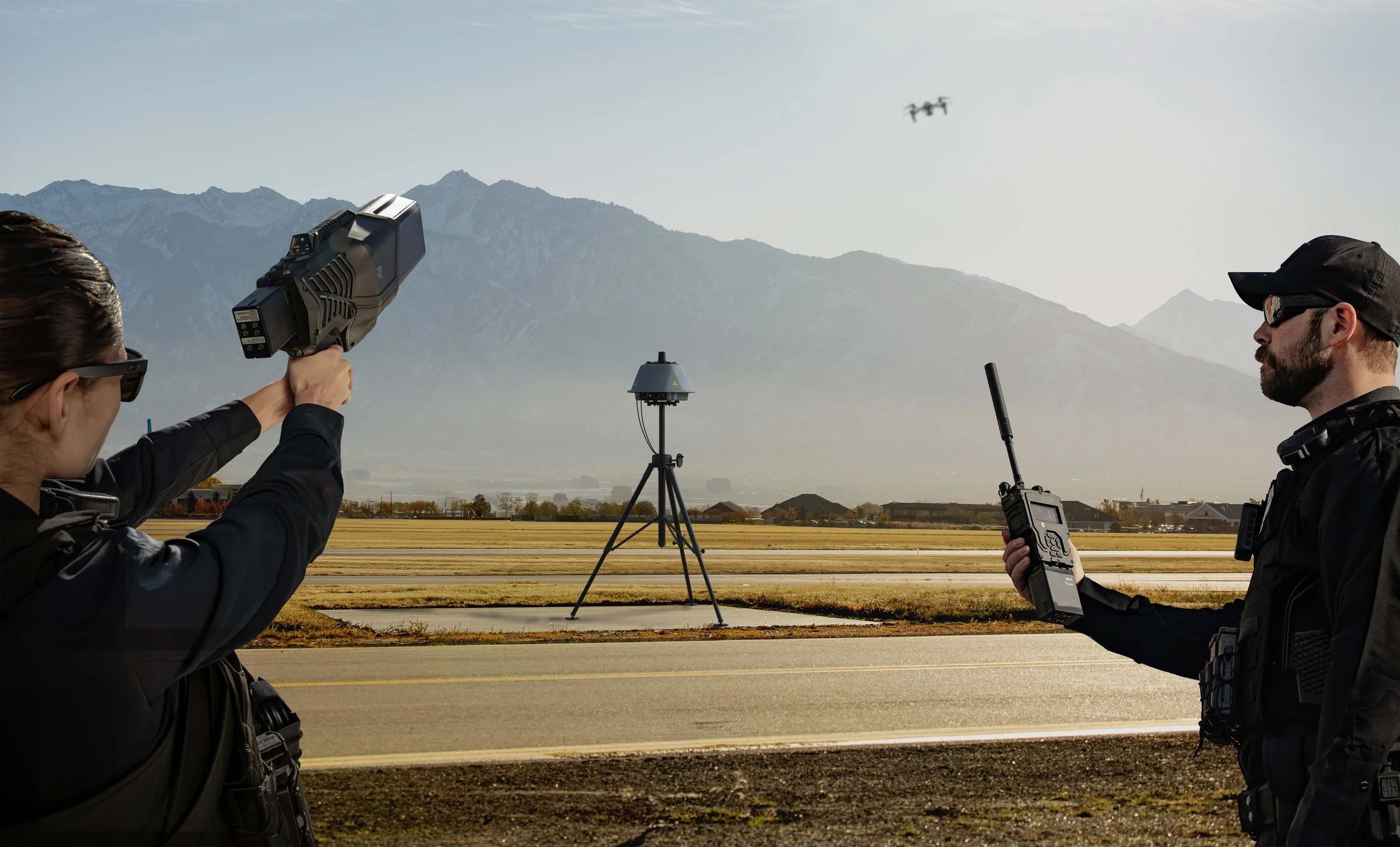
RF detection fits into a layered counter-UAS system as the signal intelligence layer. It intercepts a drone's communications, including its Remote ID broadcast where available, to identify protocol, telemetry, and operator location, complementing radar's longer-range, all-weather tracking and EO/IR (Electro-Optical/Infrared) visual confirmation. No single sensor type covers every scenario alone, so counter-UAS RF technology is typically deployed alongside other sensors, though it also functions as a complete standalone solution for narrower deployments such as a single fixed site or expeditionary.
In layered deployment, sensor fusion software such as DroneShield’s SensorFusionAI, draws these separate inputs together, providing a single comprehensive operating picture. By correlating RF detections with radar tracks and EO/IR confirmation, a layered C-UAS system gives a security team continuous airspace intelligence rather than a series of disconnected alerts. Civil aviation authorities like the FAA receive more than 100 drone sighting reports near airports every month, and each one tests whether a security team can move from an ambiguous report to a confirmed track quickly enough to act. The multi-hour air traffic suspension at Eindhoven Airport in November 2025, following unconfirmed drone sightings, illustrates what that gap costs when a correlated, fused picture isn't yet in place.
What Are the Limitations of RF Drone Detection?
RF detection's central limitation follows directly from how it works. A drone that doesn’t transmit a signal can’t be detected by scanning the spectrum for one.
Fully autonomous drones operating on pre-programmed GPS or GNSS waypoints, with no active command-and-control link back to an operator, fall outside passive RF detection's coverage.
With previous-generation detectors, so do drones operating on frequencies or protocols not yet represented in a system's signature library, although regular library updates narrow this gap over time. With next-generation RF detectors, this problem will be approached with AI software that seeks to detect the UAS despite not being previously catalogued.
RF spectrum congestion presents a separate challenge. In dense urban environments or near military installations with heavy radio traffic, isolating a genuine drone signal from background noise requires more sophisticated filtering, a more comprehensive signature library, or advanced new AI software to maintain accuracy.
These limitations are an argument for layered detection, not a reason to dismiss RF as a sensor type. Paired with radar and EO/IR, RF detection's blind spots are covered by the layer's other inputs, and its own advantages (range, passivity, and operator location data) cover gaps the other sensors leave open.
Frequently Asked Questions About RF Drone Detection
Q: Is RF drone detection the same as radar detection?
A: No. Radar emits a signal and analyzes the return. RF detection passively intercepts signals the drone itself transmits, which makes it covert but dependent on the drone emitting a signal in the first place.
Can RF detection find drones that do not transmit a signal?
A: No. Fully autonomous or no-link drones are RF detection's primary blind spot, which is why most layered systems pair it with radar and/or EO/IR.
Q: How far can RF drone detection systems detect a signal?
A: Range depends on antenna sensitivity, terrain, and RF congestion in the environment. Specific range figures vary by sensor and deployment and should be sourced from verified system specifications rather than a single general claim.
Discovering RF Drone Detection Coverage Gaps
Most airspace security gaps aren't discovered during an incident; they're dissected after the fact, when a team is asked to explain why a drone wasn't tracked, classified, or intercepted in time. RF drone detection helps close this security gap by providing hemispheric counter-UAS intelligence before an incursion takes place. Teams assessing current detection coverage can request an airspace threat assessment to identify where RF detection would add the most value and which deployment model fits the site. Discover more about mission-specific drone threat support by connecting with the DroneShield team: https://www.droneshield.com/connect-with-us