

What Passive Detection Brings to Modern Counter-Drone Operations
The core principle behind passive RF detection is simple: remain alert to drone signals without announcing one’s position in the field. In contested and complex environments, that silent awareness can provide a meaningful operational advantage. But the value of passive RF detection goes beyond covert detection.
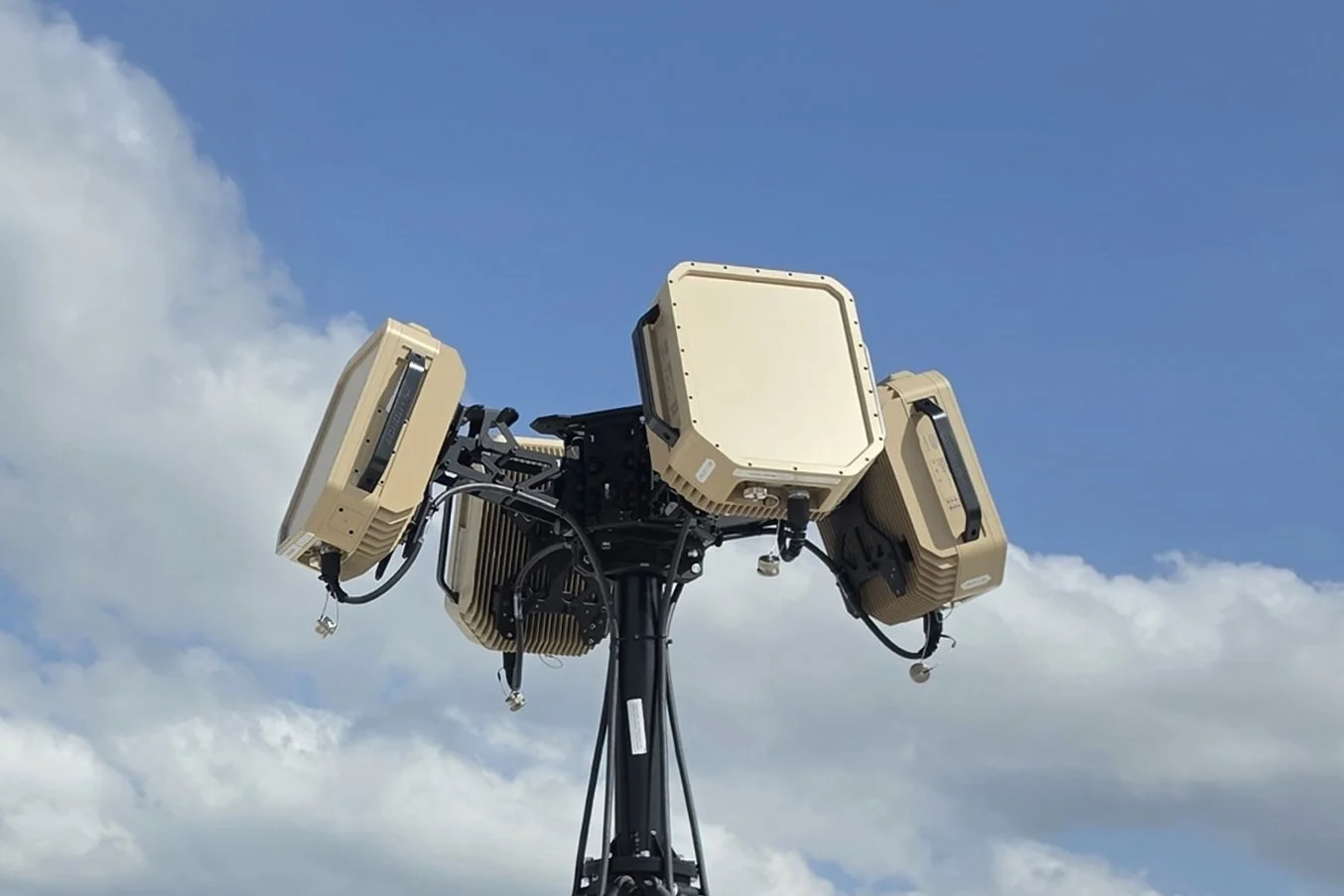
Active sensors like radar are powerful options in layered CUAS architectures, but will announce their presence, creating a potential liability in sensitive theatres.
The Problem with Active Sensing
Traditionally, radio detection also meant transmission, as radar-based systems broadcast energy into airspace and then analyze what returns. This is an effective approach and recent advances in purpose-built anti-drone radar have made them increasingly capable detectors.
But the inherent tradeoff remains. An active radar can reveal its position as it seeks out threats, which can create a liability in sensitive operational environments. Where electronic warfare is a factor, that may not be an acceptable risk.
A detection system that can be located is a detection system that can be avoided or engineered against. In many deployments, operational security requirements make passive RF sensing the baseline sensor of choice precisely because it contributes no emission signature to the local RF environment.
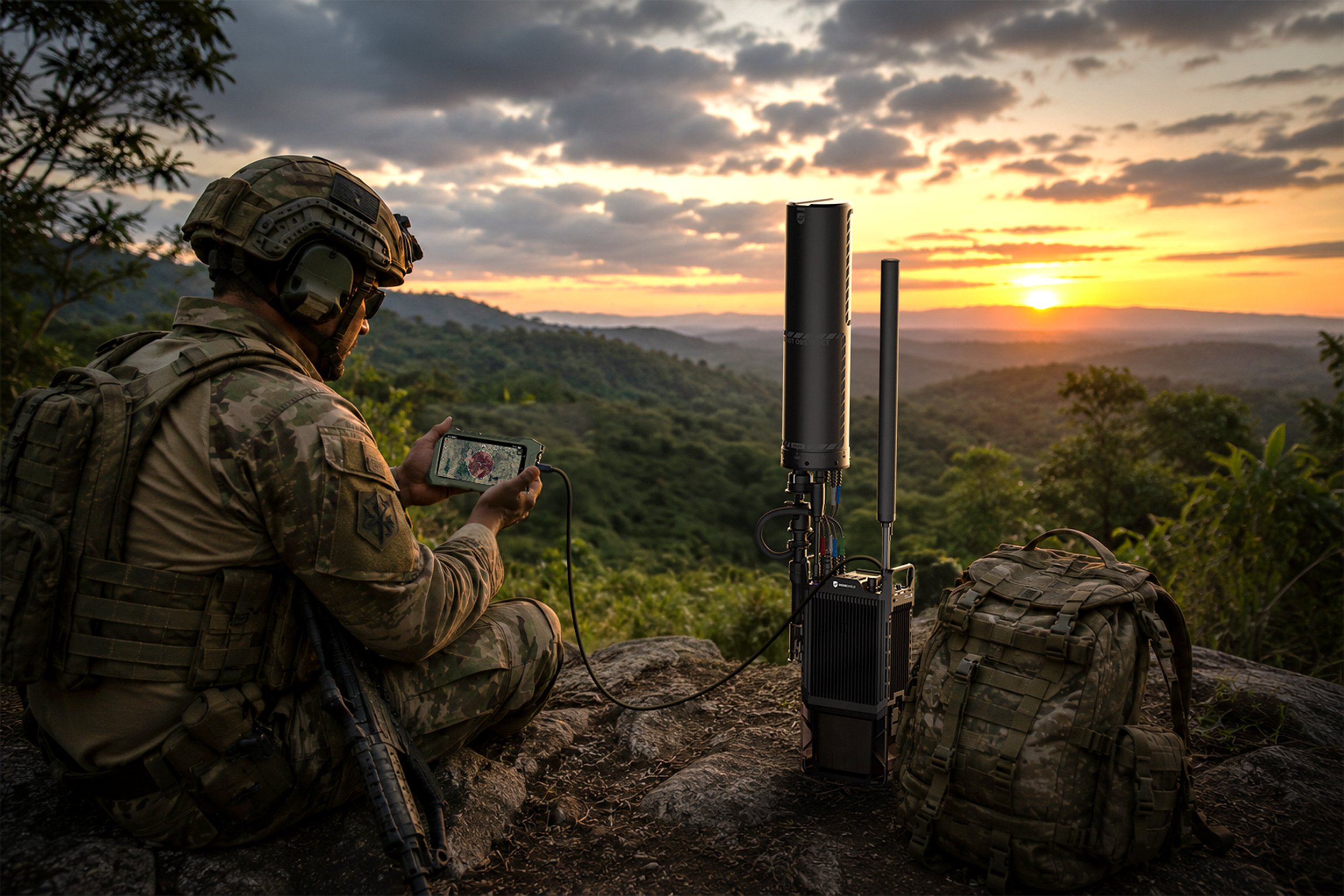
The RfRecon provides passive ultra-wideband RF sensing
What Does Passive RF Detection Provide?
Passive RF detection doesn't announce itself. It monitors the spectrum continuously without transmitting, which means it can't be detected, located, or jammed through conventional means.
In active theatres and sensitive deployments, that covertness gives operators a persistent intelligence advantage without the liability of revealing their position.
Beyond covertness, capable passive detectors provide a set of counter-drone advantages including controller location data and ultra-wideband signal intelligence.
Signal Intelligence, Not Just Detection
Radar can inform the counter-drone operator where a drone is, while passive RF is capable of providing information about what it is. This kind of signal intelligence can change the reaction in active scenarios.
RF detectors can sense a commercial platform's Remote ID, for example, providing detailed information about the drone, including its identity, location, altitude and other flight data.
If Remote ID is not available, traditional RF detectors maintain continuously updated RF signature catalogs covering commercial platforms and widely deployed FPV drones. This signature matching is dependable for identifying known emitters.
However, as threats outpace traditional signature catalogs, AI driven engines like RfAI-3 extend detection beyond known signatures, characterizing previously unseen platforms from signal behavior alone.
At the same time, ultra-wideband scanning provides visibility across the full spectrum, addressing the frequency hopping and signal agility increasingly seen in evasive drones. Traditional narrowband sensors can miss these signals entirely.
This additional context makes a real difference to counter drone responses. Detecting a standard commercial platform on a known protocol in a controlled area is a different scenario entirely from an unrecognized signal at the perimeter of a protected site. That distinction matters when response cadence and subsequent action are critical.
Locating the Operator, Not Just the Drone
This is where passive RF detection provides intelligence that no other sensor type generates.
A drone's control link can carry operator position data. When present, a capable passive RF system can resolve a bearing to the controller as well as the aircraft, and with multiple sensors, triangulate an estimated operator location.
In many operational scenarios, the person controlling the drone is just as much an actionable target as the aircraft itself, if not more so. A solution that locates both fundamentally changes what a response team can do with the information.
Operational Flexibility Across Environments
One of the most beneficial attributes of passive counter-UAS detection is where and how it can be deployed. As passive RF sensors do not compromise a position or transmit into the spectrum, they can be advantageous across a range of sensitive and dynamic operational contexts.
When that passive capability is combined with portability and simple setup, the result is a solution that can move from fixed sites to forward deployments without the infrastructure typically associated with larger radar systems or complex layered sensor arrays.
This adaptability is particularly valuable for:
Fixed site installations that benefit from continuous, persistent coverage without the overhead of active emissions management
Mobile and dismounted teams that need to deploy forward without advertising their position
Maritime and border environments, where spectrum discipline is operationally critical
This flexibility also extends to interoperability. Passive RF solutions can feed detection data into existing command and control infrastructure, supporting broader situational awareness without requiring a wholesale rebuild of the existing sensor architecture.
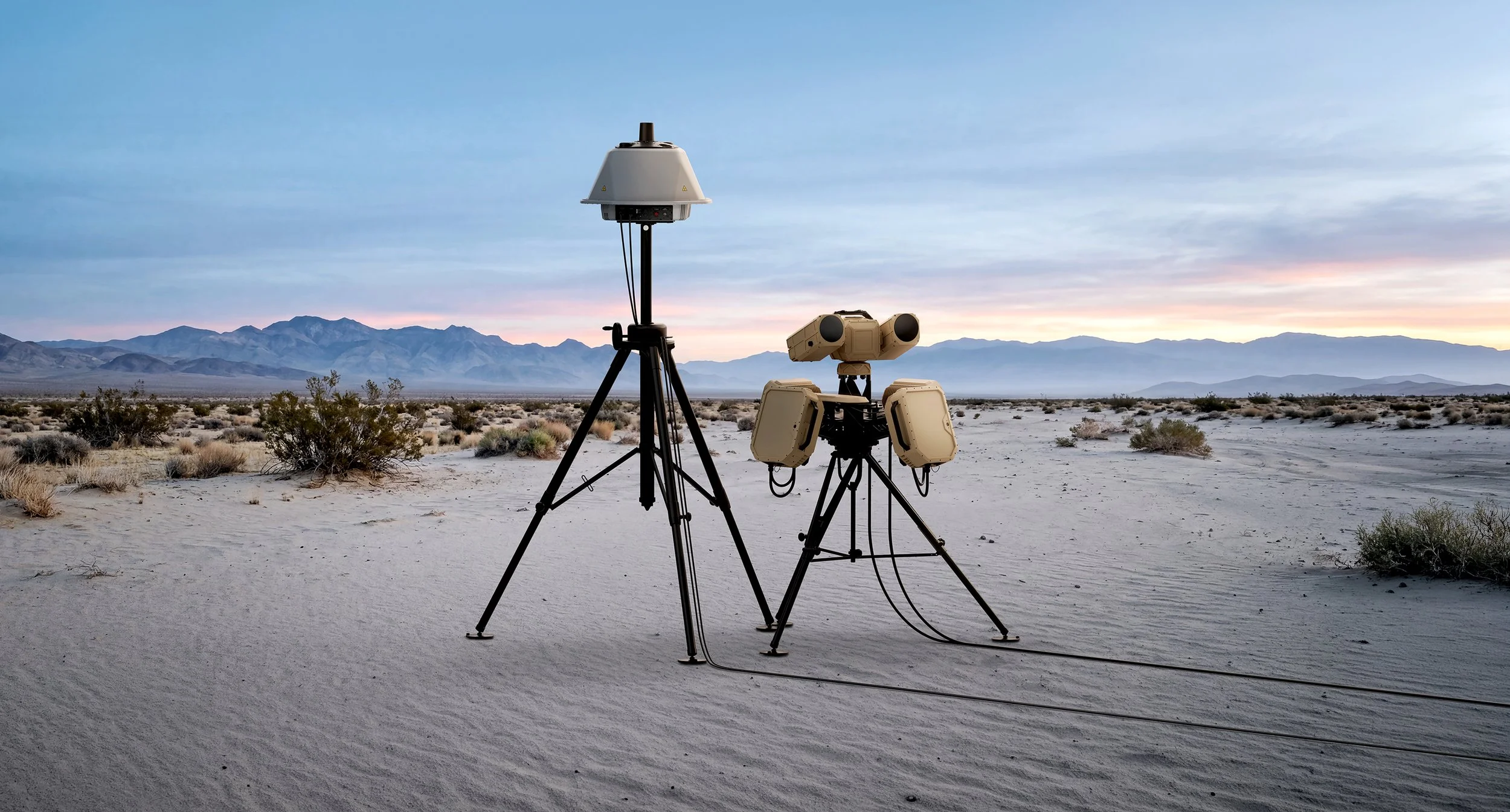
Layered architectures combine RF detection with interoperable sensors and defeat technologies.
The Case for Layered Detection
Passive RF detection is a highly capable primary detection layer. It isn't always, in isolation, a complete system. In scenarios where covertness matters less than the fullest threat picture available, layered counter-UAS detection becomes a strong option.
No single sensor solves all threats. Building a capable counter-drone detection architecture increasingly means combining multiple sensor types in an interoperable, software-defined stack, with each modality addressing different aspects of the UAS threat.
Primary drivers behind adopting a layered UAS ecosystem:
The increasing proliferation of purpose-built and DIY drones capable of operating with minimal or no RF emissions
Fixed-wing designs operating at ranges and altitudes that challenge short-range sensor coverage
Operating environments where signal silence is not the primary concern
The UAS threat doesn’t present itself in a single, consistent form, and CUAS layered defense architectures must respond to this reality. Any counter-drone system built around a single modality will have gaps.
Layered detection architectures exist for precisely this reason. The goal isn't necessarily to eliminate coverage gaps entirely. It's to make them narrow enough that exploiting them consistently becomes difficult.
In practice, this layering includes:
Passive RF as the persistent, low-signature foundation
Radar or acoustic sensors to cover RF-silent or autonomous platforms
Electro-optical/infrared sensors supporting positive identification and engagement cueing
An AI-enabled command-and-control layer translating multi-sensor inputs into real-time threat awareness
The architecture is cumulative by design. Multi-sensor correlation improves detection confidence and resilience by validating threats across multiple sensing modalities, making it harder for an adversary to defeat the detection architecture by countering a single layer.
The Passive Detection Advantage
RF detection remains one of the most operationally viable sensing layers available. Its ability to provide persistent, low-signature awareness, covert operation, controller location, and full airspace intelligence, makes it the foundation of modern counter-UAS architectures.
A detection architecture that announces its own presence is one an adversary can plan around. One that doesn't offers significant operational advantages.