

Looking Toward LA28: The Future of Drone Security for Large-Scale Events
The FIFA 2026 World Cup laid the groundwork for a new era of large-scale event security. With the LA Olympics on the horizon, security professionals and authorities must coordinate to secure an increasingly complex airspace shared by drones, helicopters, public safety aircraft, media platforms, and emerging air taxi operations.
The New Security Perimeter Is Above the Arena
Event security was once predicated on two dimensions. Gates, barriers, ground monitoring, foot patrols, CCTV, and access points were the staples. While these elements remain necessary, they were not built with the third dimension in mind.
A credential check does not stop a drone flying in from outside the perimeter, and a flight restriction is just a legal line on a map, not a detection solution.
Drones present security concerns along a spectrum. On one end there are hobbyists perhaps unwittingly breaching a no-fly zone with an off-the-shelf drone. On the other end is an adversary controlling an evasive DIY platform with malicious intent. There is much in between.
Despite intent and sophistication, each unauthorized drone incursion needs to be treated seriously, appropriately, and escalated to relevant authorities for action. To do that, comprehensive counter-drone security systems must be in place to complement traditional ground level security.
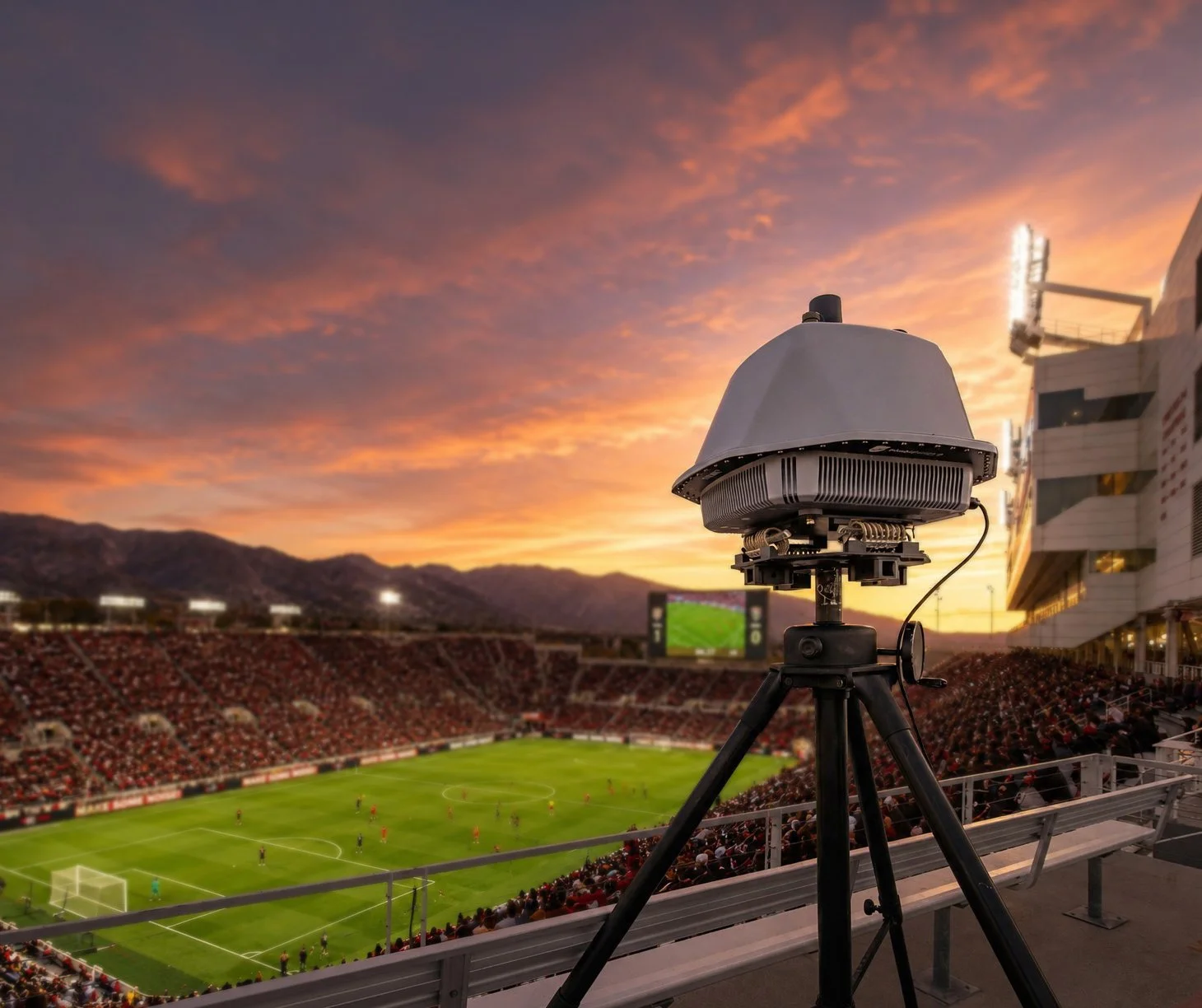
Over 700 illegal drones were seized during the 2026 World Cup.
Counter-Drone Lessons from FIFA World Cup 2026
The FIFA World Cup 2026 presented the USA, Mexico, and Canada with a crystallized version of a dynamic that has been brewing for some time: the rising appearance of drones at events.
Across every US host city, the FBI reported more than 700 illegal drones seized over the course of the tournament, despite public warnings, Temporary Flight Restrictions, and coordinated law enforcement presence in every location.
In Kansas City, more than 800,000 attendances were recorded across six matches and the Fan Festival, with visitors from more than 150 countries. Drone seizures climbed from 32 by late June to 48 by 21 July.
DroneShield deployed a layered counter-UAS architecture across seven operational sites throughout the city, supporting federal, state, and local authorities. RF detection formed the primary layer, with Echodyne EchoShield radar confirming detections and covering non-emitting drones, and Airspace Link's AirSight platform drawing information into a shared picture of the airspace. The collective detections identified several hot spots across urban areas, giving law enforcement a clearer focus.
That was the scope of one World Cup host city. For future events, the scale of unauthorized drone activity will only expand.
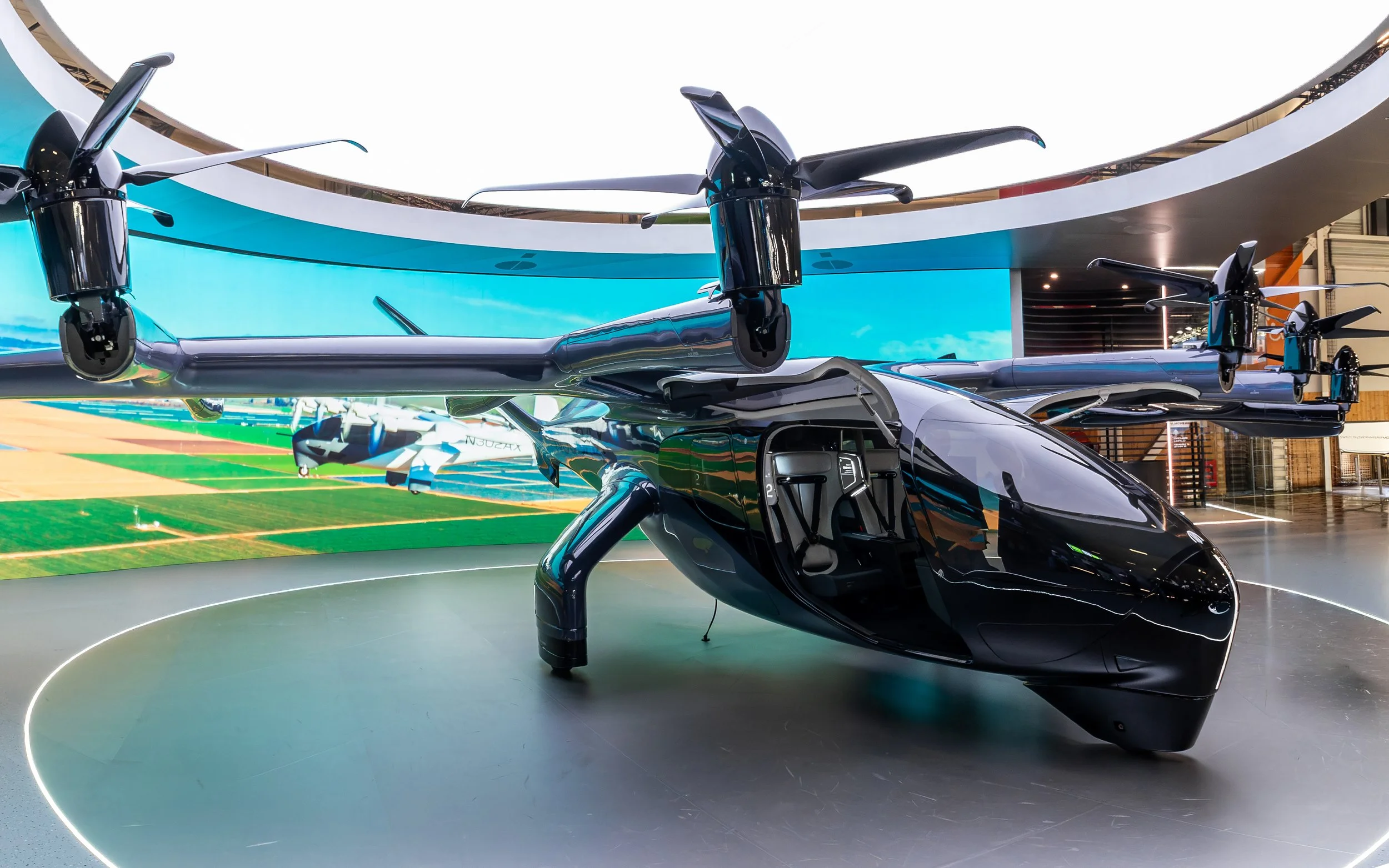
Air taxi service: Archer Aviation’s Midnight eVTOL to debut routes at the LA Olympics.
Air Taxis to Complicate the Airspace
Electric air taxis are no longer a futuristic concept. They’re an emerging form of aviation set to further convolute event airspace, and they must be accounted for.
The LA Olympics will be the testing ground for this novel form of air transportation through Archer Aviation, the official air taxi provider for LA28. Archer's Midnight eVTOL is set to run routes into venues for fans and VIPs, with vertiports planned across the city.
That inserts a new category of aircraft into the airspace mix. Legitimate, cooperative, and flying in the same low-altitude space a counter-drone system is already monitoring. Misidentifying in either direction could mean either overlooking a genuine threat or flagging a legitimate air taxi as one. This is not an option at an Olympic-level event.
Comprehensive airspace awareness is required to contextualize and decode a complex low altitude environment. ADS-B scanning for example, will be a baseline requirement for counter-drone detection systems, which marks and tracks legitimate air traffic like helicopters and air taxis, differentiating them from drone threats.
Contextualizing Cooperative RF Activity and Background Noise
The noise floor at a stadium and the surrounding urban environment is exceptionally dense.
Radio frequency signals from tens of thousands of personal devices will compete with event broadcasting and communications, Wi-Fi and Bluetooth infrastructure, cell towers, approved media and police drones, helicopters, and now air taxis.
This barrage of signals creates a complicated airspace requiring experienced C-UAS technical expertise and a comprehensive solution rollout across protected arenas and sites.
To decode the RF environment and isolate drone threats, security teams need a centralized view that contextualizes green-lit traffic and inconsequential RF noise. Modern detectors need to be able to sense Remote ID signals to identify known retail models, scan the full ultra-wideband spectrum for unknown or evasive drone emissions, and map legitimate air and maritime traffic with ADS-B and AIS capability.
This signal data needs to converge into a unified picture, not separate feeds that a security team has to cross-reference under pressure. Comprehensive RF intelligence is what lets a security team understand the airspace instead of simply monitoring it, and isolate genuine threats in an airspace this complex.
Once the airspace is understood, security teams can receive clear, actionable drone alerts they can respond to immediately.
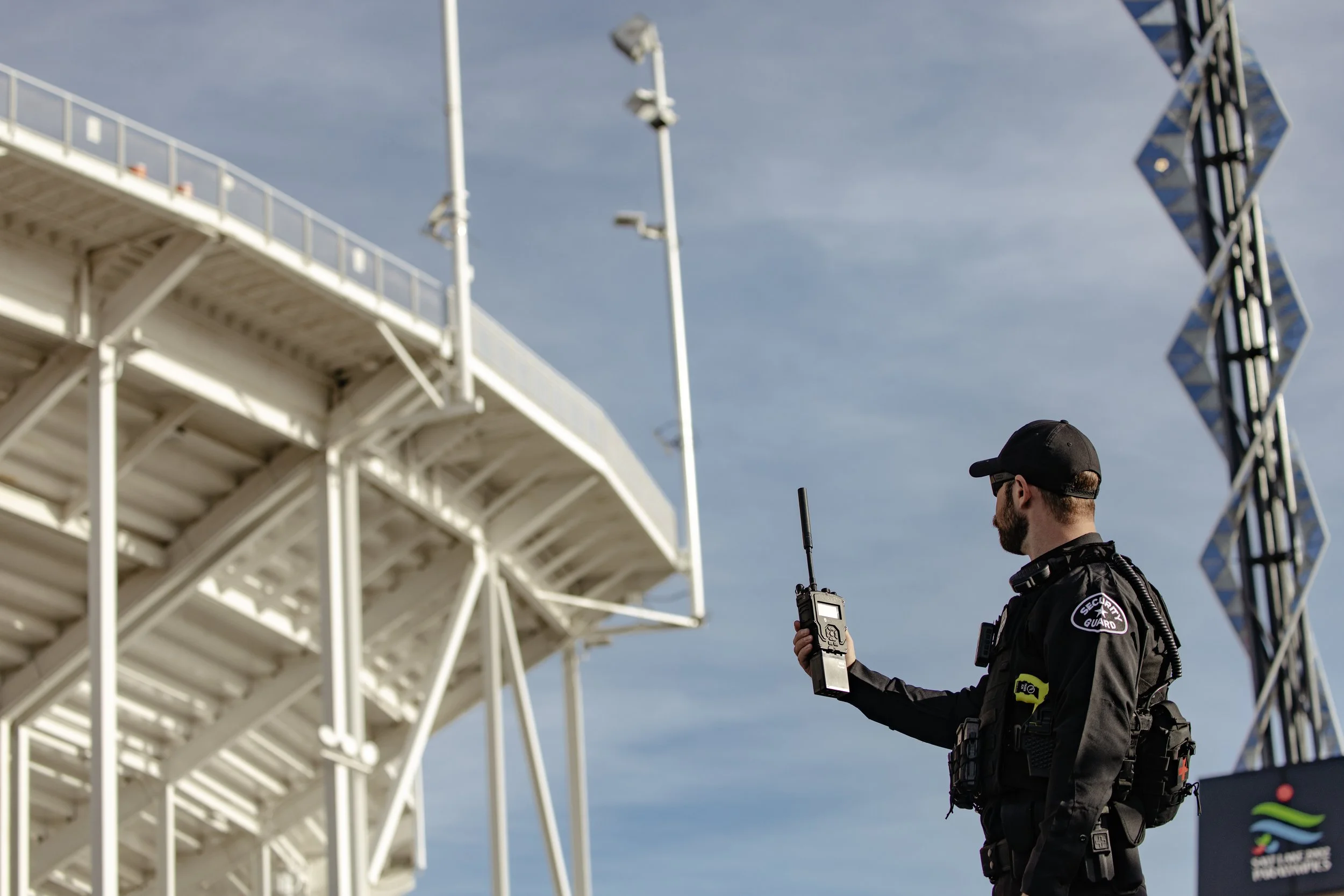
Unified counter-drone intelligence underpins coordinated, decisive action.
A Layered, Coordinated Response
No single authority is solely responsible for airspace management and counter-drone security at events like the World Cup or the Olympics. Inter-departmental synchronization needs to be robust, and a shared counter-drone picture is central to all coordination.
To hold up at large scale events, the counter-drone architecture underpinning authoritative action needs to achieve several things at once: detect drones early, tell the difference between a threat and a legitimate aircraft, and escalate that information to the right people fast enough to act on it.
No individual sensor does all of that alone. RF detection forms the primary layer, with solutions like RfRecon delivering ultra-wideband spectrum coverage for unknown drones, alongside Remote ID and ADS-B for known aircraft. The radar layer confirms those detections independently and covers non-emitting drones.
This is the new three-dimensional security reality. The airspace over a major event must now draw immediate focus. It's full of legitimate traffic, hostile traffic, and anomalies of interest. Differentiating them confidently and under pressure is crucial.
FIFA 2026 was the proving ground. LA28 is the next test.