

Passive vs. Active Drone Detection: What’s the Difference?
Passive drone detection solutions listen for the radio frequency (RF) emissions between a drone and its controller, without transmitting any signal itself, making it an entirely covert detection method.
Active detection, such as radar, emits a signal and analyzes the return, providing reliable physical detection of drones, especially those that don't transmit a radio signal. However, radar reveals the defending system's location and operating frequency. Many modern layered counter-UAS deployments use both methods together.
The distinction between active and passive detection isn't simply an academic exercise. A security team choosing detection architecture for a high-value asset or site isn't solely deciding on the effectiveness of each method, as they both offer highly successful rates of UAS detection. The most pivotal question centers around operational trade-offs, the specific C-UAS deployment environments under consideration, and what an adversary can do with the information a counter-drone detection solution reveals about itself.

What’s the Difference Between Passive and Active Drone Detection?
The core difference between passive vs active drone detection is whether the detection system emits a signal of its own.
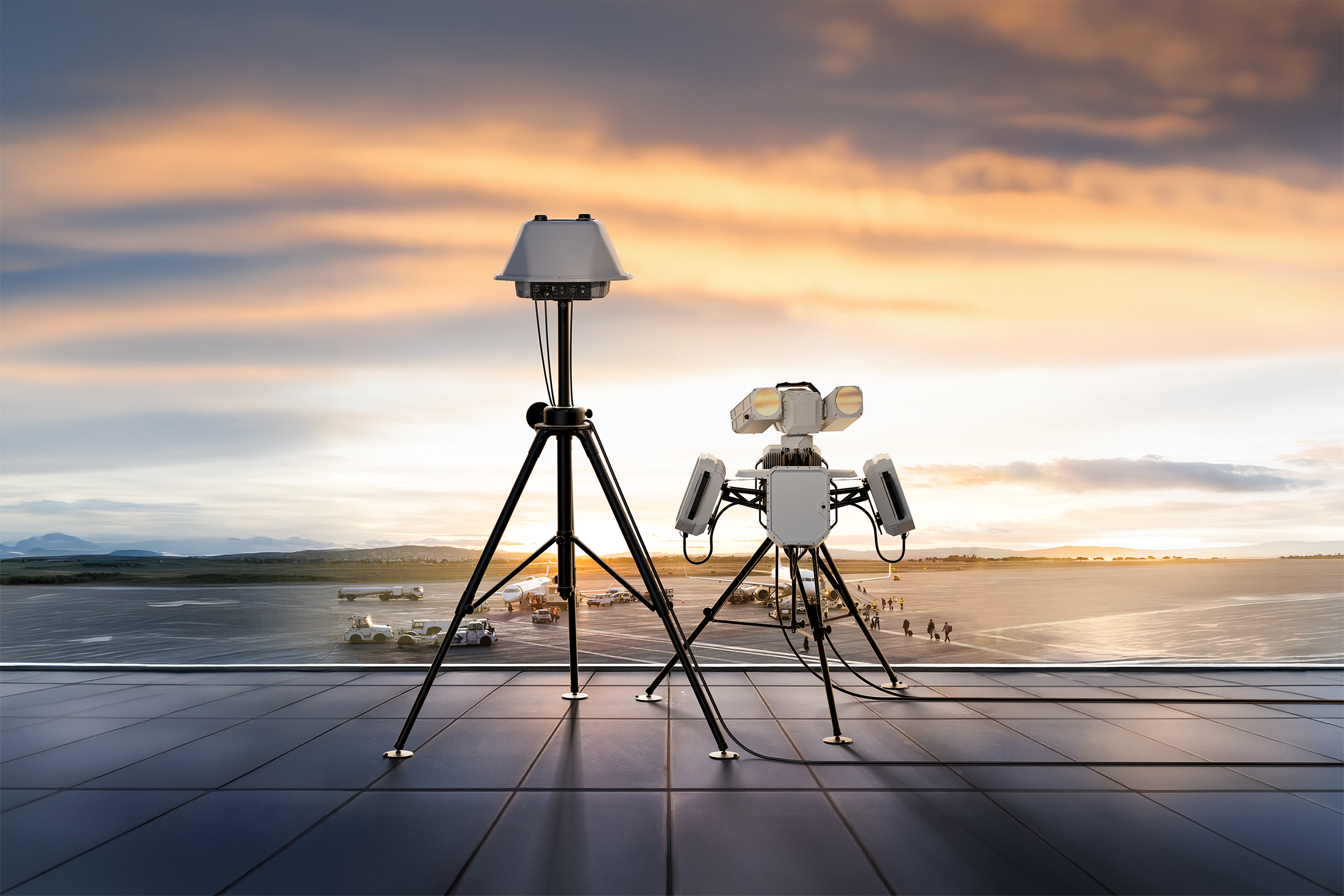
Passive drone detection solutions, such as the RfRecon, intercept the radio frequency signals a drone is already transmitting (typically the command-and-control link between the UAS and its operator) and analyzes those signals to identify, classify, and locate the aircraft. The deployed solution contributes no RF emission of its own, meaning that from an adversary's perspective, a passive RF detection deployment is essentially invisible.
Active detection, most commonly radar, works in the opposite direction. Radar systems operate by transmitting an outbound signal, waiting for it to reflect off a physical object, and analyzing the return to determine the aerial platform’s location, speed, and trajectory.
Because radar detects physical presence rather than RF emissions, it can sense drones that aren't transmitting any radio signals at all. Because it emits to do so, it actively announces its own presence, including position and operating frequency. This can have notable operational consequences if radio silence and discretion are of concern.
While each method can operate as a standalone counter-drone solution, in modern layered C-UAS deployments, neither solution is complete in isolation. Each has a category of threat it handles well and a category it can't address, and each can account for the other’s gaps. Understanding where those boundaries sit is what drives serious deployment architectures.
What’s Passive Detection?
Passive RF sensing works by scanning the frequency bands drones commonly use for command-and-control links, telemetry, video downlink, and Remote ID broadcasts.
When a signal is detected, software typically compares its waveform characteristics and modulation pattern against an archive of known drone signatures to confirm a UAS is present and, in many cases, identify its make and model. Next-generation AI software, however, such as RfAI-3 extends this capability to identify a drone based on its signal characteristics, without relying on a catalog of known UAS signature data.
The operational advantages of this approach are significant in environments where revealing the detection system's presence would be a liability. A military installation, a critical infrastructure site, or any location where an adversary is actively probing for sensor coverage will benefit from a detection layer that offers no revealing. A passive drone detection system doesn't advertise its coverage area, doesn't give an adversary a signal to detect, and by its nature, is virtually impossible to jam.
For military and government operators, this is more than a mere technical advantage. A detection system that can be located is a detection system that can be avoided or engineered against. Operational security (OPSEC) requirements in many deployments make passive RF sensing the baseline sensor of choice precisely because it contributes no emission signature to the local air littoral.
A drone’s control link often carries operator position data, meaning passive RF emitter detection can generate location intelligence on the individual flying the drone, which no other single sensor type produces. This capability to locate both the operator of a drone and the UAS itself represents an operationally significant advantage over radar.
What’s Active Detection?
Radar's fundamental advantage is independence from the drone's RF and signal behavior, or lack thereof.
Increasingly, drones fly autonomously on pre-programmed GPS waypoints, or use onboard visual sensors, with no active radio link, especially modified and military platforms. Such drones produce limited or no RF emission for a passive system to detect. Active radar, however, can detect them anyway, because radar tracks physical presence, not signal presence. Other drones only use sparing RF links in the initial or terminal phases of flight.
This matters in threat environments where adversaries have moved toward advanced autonomous platforms, including the emerging fiber-optic drones seen in the battlefields of Ukraine, specifically because they understand passive RF detection's blind spot.
A drone that’s pre-loaded with a flight path and a payload, launched without any ongoing operator link, may produce no RF signal during flight. This is a non-cooperative detection scenario where radar remains effective and passive RF sensing cannot.
Counter-UAS radar detection also provides longer detection range in open environments and consistent performance across adverse weather conditions where electro-optical and infrared (EO/IR) sensors may be degraded.
The trade-off comes down to detectability of the solution itself. A radar system's emission will actively announce its presence to any adversary with the right equipment. Its location can be inferred, and its operating frequency can be identified. In a contested environment, this means actively surrendering crucial operational intelligence to potentially hostile parties.
The Trade-Off: Covertness vs. Coverage Against Silent Drones
The choice between passive and active detection isn't necessarily a judgement on counter-drone capability. It's often an operational question.
A deployment prioritizing covertness would view surrendering their location as an unforgivable compromise and assess passive RF detection favorably.
A deployment prioritizing coverage against a fuller threat spectrum, including autonomous platforms with no radio link, will require active detection in the stack regardless of how that may compromise their location.
In most real-world environments, the decision isn't either/or. Oftentimes, both threat categories are present or possible, including drones under active RF control and drones running autonomously. A detection architecture that addresses only one leaves an unattended gap. However, each deployment deserves its own specific consideration, there are many scenarios where baseline portable RF detection is sufficient, and scenarios where full fledged fixed-site layered arrays are necessary.
The table below maps the key operational differences between passive and active detection, and what a layered system combining both provides.
Why Layered C-UAS Architectures Include Both
Counter-UAS deployments at the highest threat level almost universally combine passive RF sensing with active detection.
In layered deployments, Each method's primary limitation is covered by the other's primary strength. RF detection's blind spot, the autonomous drone with no active link, is covered by radar. Radar's transparency to an adversary is offset by pairing it with a passive RF layer that provides covert baseline coverage.
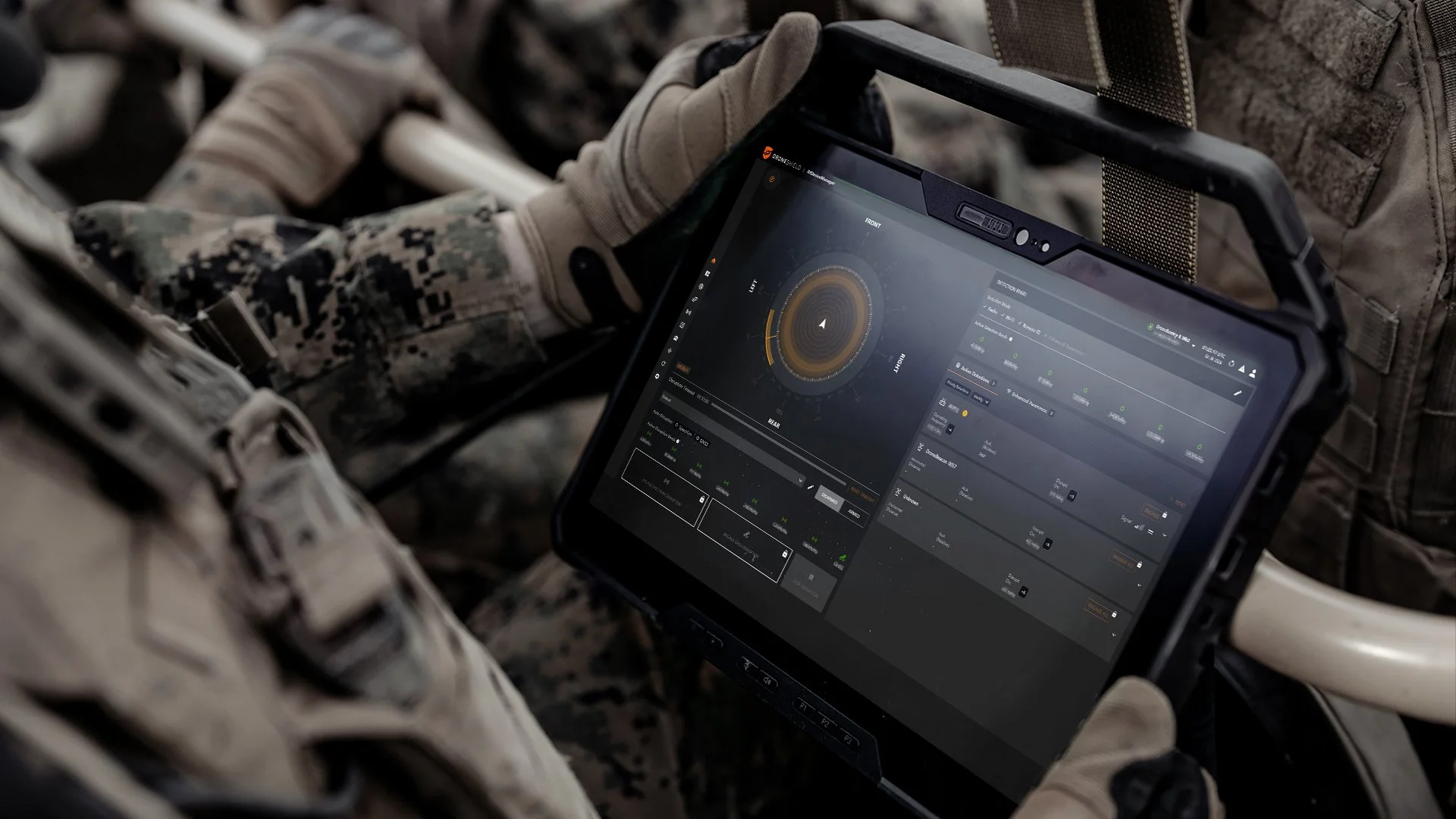
Further than this, they complement each other by providing confirmation of detection, using Sensor Fusion AI software to amalgamate separate signal data into a fused single operating picture, plainly displayed on a C2 interface for the end user. For example, if RF sensing picks up a likely drone, radar can then confirm and provide dot-on-map location. The UAS can be further tracked by EO/IR visual sensors, giving the operator a highly dependable and detailed threat picture.
DroneShield's sensor architecture is built around this principle. RF detection using ultra-wide band sensing provides the passive, covert intelligence layer, capturing signal identity, drone classification, and operator location where available. Radar and EO/IR complement that layer with physical tracking and visual confirmation, covering the autonomous and no-link platforms the RF layer can't sense. The combined picture is more complete than either method produces alone, and its coverage gaps are narrower than any single-sensor deployment.
Frequently Asked Questions About Passive and Active Drone Detection
Q: Which is better, passive or active drone detection?
A: Neither is universally ‘better’. Passive detection is covert and harder for an adversary to detect, while active detection such as radar reliably finds drones with no RF signal. Most layered systems use both because each covers the other's primary limitation and enhances detection accuracy.
Q: Can active drone detection systems be detected by an adversary?
A: Yes. Because active systems like radar emit a signal, an adversary with the right equipment can potentially detect that emission and deduce the defending system's location and operating frequency. This is one reason passive RF detection is valued in sensitive or contested deployments.
Q: Does passive RF detection work against drones with no radio link?
A: No. Passive RF detection depends on intercepting a drone's transmission, so fully autonomous or non-transmitting drones fall outside its coverage. This is one reason it's typically paired with radar in layered counter-UAS architectures.
Selecting the Right Detection Architecture
The gap between a detection system that performs on a test range and one that performs in a real operational environment often comes down to architecture decisions made before deployment. Passive RF sensing, active detection, and the combination of both fit different threat profiles and operational requirements.
Security teams assessing ideal detection coverage and architecture can request mission-specific counter-drone advice: https://www.droneshield.com/connect-with-us