

Common Limitations of Drone Detection Systems, and Why Layered Defense Closes the Gaps
Every drone detection method has its limitations. RF detection can’t identify unmanned aerial systems (UAS) without active radio links, radar struggles against small or slow-moving targets and ground clutter, electro-optical and infrared (EO/IR) sensors are limited by lines of sight, and acoustic detection loses effectiveness in noise-dense environments. No single sensor type covers every scenario. That's why comprehensive counter-UAS deployments use sensor fusion to combine multiple sensor types, each covering what another cannot.
Understanding those blind spots and catering for them is the starting point for modern comprehensive detection architecture. A security team that knows exactly where each sensor type collapses is far better positioned to close those gaps than one that assumes any solution in isolation provides sufficient coverage across the threat spectrum.
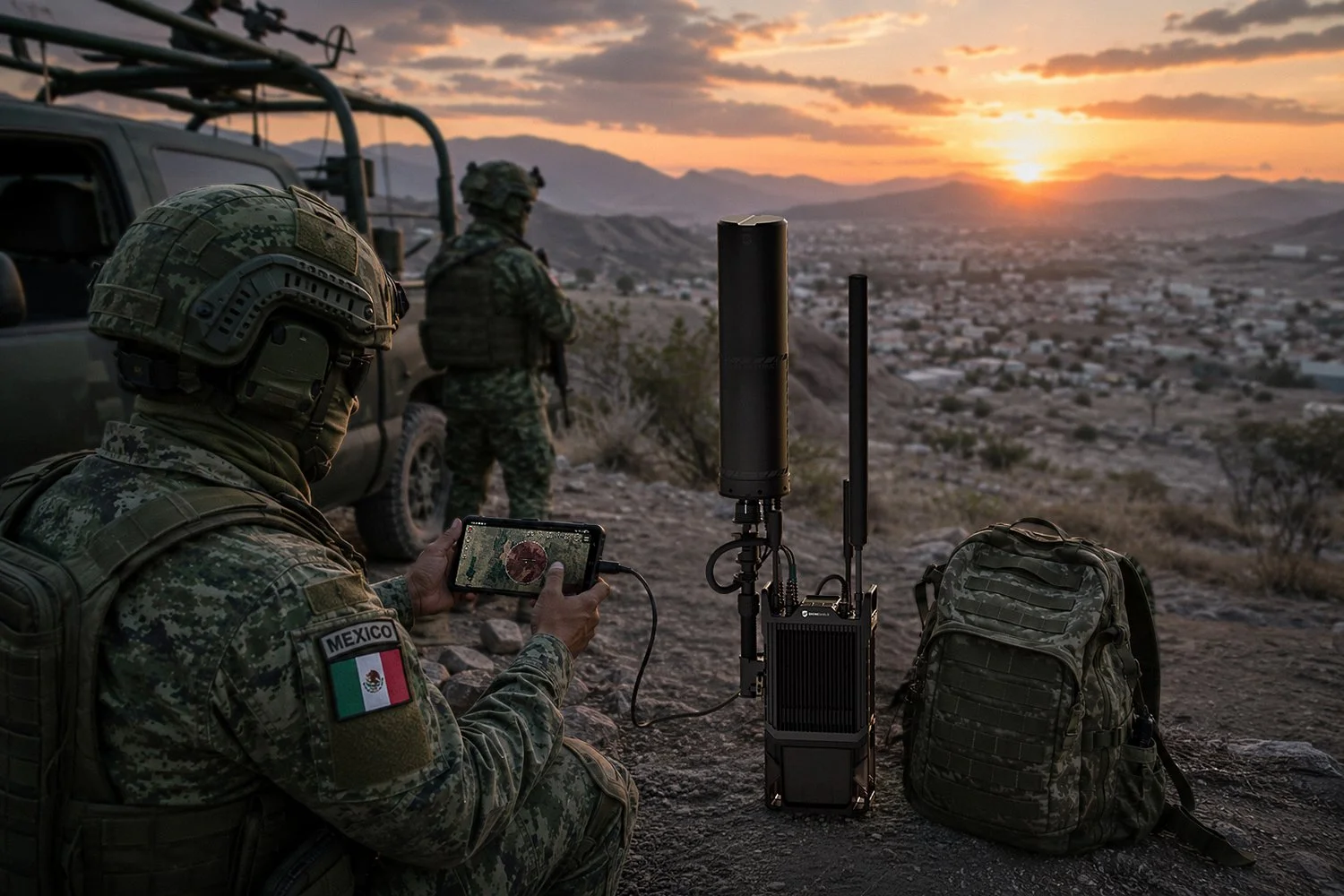
What Are the Limitations of Drone Detection Systems?
Drone detection system limitations exist across every sensor type. These aren’t periphery instances of device failure, but rather native structural differences in how each technology works.
Every individual counter-drone sensing method works by detecting a specific physical property of a drone. This may be the RF signals it transmits and receives, the physical presence it reveals to radar, the heat or light it generates or reflects, or the sound its rotors produce.
That means, by definition, each method is essentially blind to drones that don't present the specific property they were designed to detect.
The threat environment has evolved alongside detection technology, and those looking to operate within these gaps in drone detection coverage will exploit the limitations of each sensor type. Adversaries operating in contested or surveilled environments have learned to fly outside radar coverage, use pre-programmed autonomous routes to avoid RF detection, or operate purposefully in conditions that degrade electro-optical performance.
This means that counter-drone sensor limitations don’t just represent a challenge for counter-drone security teams. They also provide predictable circumvention pathways for an informed and savvy hostile party.
The table below summarizes each sensor type's primary strength, its primary limitation, and the role it fills in a layered C-UAS stack.
RF Detection: Strong Coverage but Blind to Radio-Silent Drones
Passive RF detection is the baseline sensor layer in most counter-UAS architectures, for good reason. It operates by intercepting the radio frequency signals a drone transmits (typically the command-and-control link, telemetry, and video feed) between the UAS and its operator. These signals are then analyzed to detect drone presence, classify the platform, and estimate location. Because it contributes no emission of its own, it's covert and virtually impossible for an adversary to locate or jam.
RF detection blind spots are well-documented and technically unavoidable. A drone operating without an active RF link produces no signal to intercept. This ‘invisible’ category includes fully autonomous platforms pre-loaded with GPS waypoints, fiber-optic-controlled systems that use no wireless link during flight, and drones in terminal flight phases with severed control links.
As autonomous drones become more capable and more accessible, in no small part due to advancements pioneered during the war in Ukraine, the category of UAS that RF detection can’t sense is growing.
Another limitation of RF detection has to do with high-density radio environments. C-UAS deployments in urban environments must contend with a signal-dense ‘noise floor’, distinguishing a drone’s signal within a crowded radio spectrum littered with massive levels of competing emissions from Wi-Fi, cellular networks, Bluetooth, and IoT devices. This requires first-class counter-drone RF detection technology.
Isolating a drone's signal from that background noise is difficult and requires sophisticated signal classification using advanced AI software, with classification accuracy generally degrading as spectral congestion increases. In lower-quality and legacy solutions, this degradation can sharply heighten false positive rates.
Radar: Reliable Tracking but Vulnerable to Clutter and Detection
The core advantage of radar is its independence from the drone's RF behavior. Radar detects an aircraft’s physical presence by emitting a radio signal and analyzing the return, which means it finds drones that aren't transmitting anything at all. In open environments, radar generally provides longer detection range and all-weather tracking performance that EO/IR for example can’t match. Radar also provides reliable dot-on-map location data and target tracking that RF struggles with.
Drone detection range limitations with radar are real and specific. Small commercial drones present a weak radar profile, producing a faint return that's easily confused with ground clutter, birds, or other moving objects. When combined with slow flight patterns, the issue magnifies as the target sits closer to the ‘clutter boundary’, making clean drone identification more difficult. The result is a higher false positive rate against non-drone objects and, in cluttered environments, genuine detection gaps against smaller, slower UAS.
Radar’s second limitation is its radio visibility to other parties. Because it emits in order to detect, a radar system's position, operating frequency, and coverage pattern are detectable by any adversary with appropriate equipment. In sensitive or contested deployments, this visibility is operationally significant, as a detectable sensor is a sensor that can be avoided, suppressed, or targeted.
EO/IR: High-Fidelity Confirmation but Narrow Field of View
Electro-optical and infrared sensors can provide the highest-fidelity confirmation of any sensor type in the C-UAS stack. A high quality, trained EO/IR system can visually confirm a drone's presence, track its trajectory, and in some cases, identify its type and payload. Infrared capability further enhances this with thermal detection that allows effectiveness at night or in low-visibility conditions.
The fundamental limitation of EO/IR is limited line-of-sight and its singular focus. EO/IR sensors have a narrow field of view relative to radar or RF detection, as a single camera can’t scan in multiple directions simultaneously, nor can it see beyond obstructions or bad weather. This means that a C-UAS deployment that relies purely on EO/IR has a significant surveillance geometry problem as multiple sensors are required for comprehensive coverage as compared to the hemispheric coverage of radar and RF detection.
The performance of optical sensors also degrades notably in adverse conditions. Precipitation, fog, smoke, sunlight glare, and urban visual clutter all impose detection range limits on EO/IR performance and reduce drone classification confidence. These sensor blind spots are predictable by environment type, and are the reason that EO/IR sensors are traditionally used as confirmation for radar and/or RF solutions. When a primary sensor picks up likely UAS activity, the architecture cues an EO/IR sensor and points it toward a known bearing to confirm the detection, which simultaneously mitigates its limitations while capitalizing on its advantages. This way the EO/IR system is not tasked with searching the full air littoral horizon but used tactically as a precision verification layer in the C-UAS stack.
Acoustic Detection: Useful in Quiet Settings but Limited in Noisy Ones
Acoustic detection systems identify drones by the characteristic sound signature of their rotor blades. In quieter, more controlled environments, acoustic sensing can provide passive detection and, in some cases, rough classification by matching rotor frequency patterns against known drone signatures. When protecting the perimeter of an isolated facility, it provides a modest supplementary detection layer with no emission signature.
The limitation of acoustic detection comes down to the presence of ambient noise from environmental sources which raises the acoustic noise floor, rendering drone audio signatures undetectable at operational ranges. Urban environments, event venues, airports, military bases, and many critical infrastructure sites generate enough background noise to render acoustic detection unreliable as a primary sensor. Detection range in pristine, quiet conditions is also limited in comparison to RF or radar.
Acoustic detection's role in modern layered counter-UAS architectures is consequently narrower than many other solutions. It acts as an additional layer in quiet settings, not a primary detection method in complex operational environments.
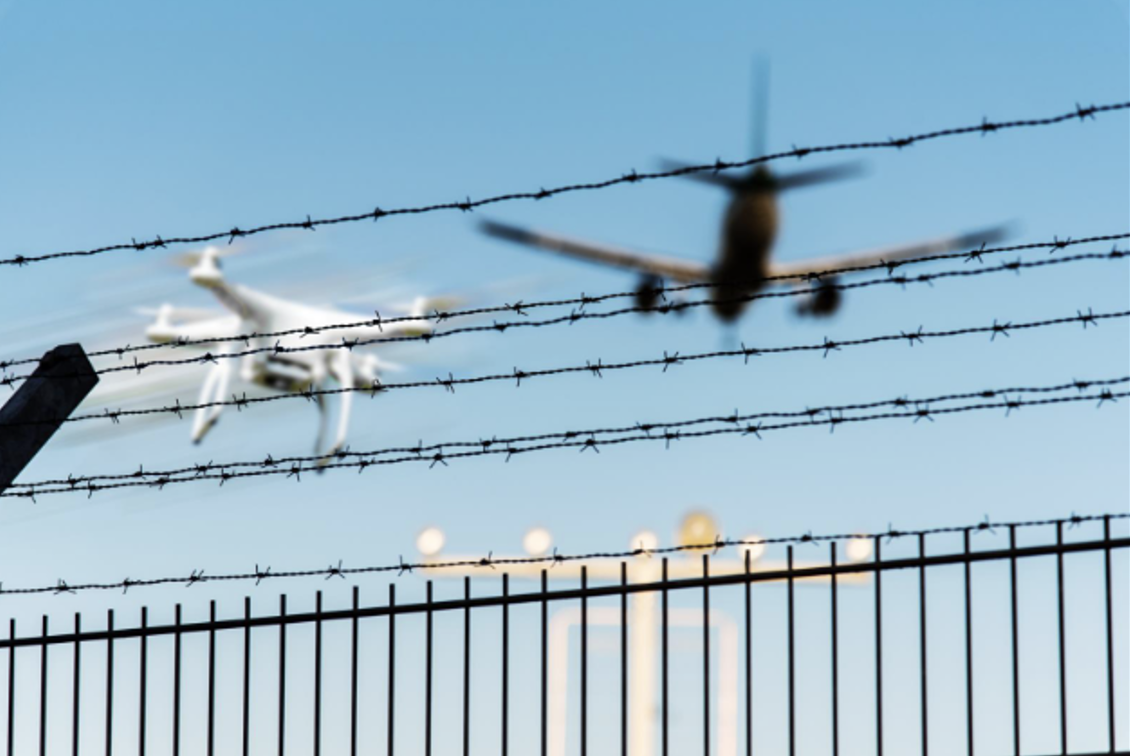
How Does Sensor Fusion Close Drone Detection Gaps?
The limitations detailed above aren't design failures. They're the predictable result of each sensor type working from fundamentally different physical principles.
An RF system can’t detect a platform which doesn’t produce an RF signal. A radar system can’t be invisible while it emits. An EO/IR sensor can’t cover a hemisphere. Recognizing this is what drives layered multi-sensor drone detection architecture.
This doesn’t mean additional sensors in a stack provide redundancy for their own sake, but rather the deliberate pairing of complementary sensing methods, each covering what another can’t. Sensor fusion counter-UAS systems are what make this possible at scale. Further than this, multiple sensors that detect a possible drone can have this verified by the rest of the stack, providing firmer UAS confirmation.
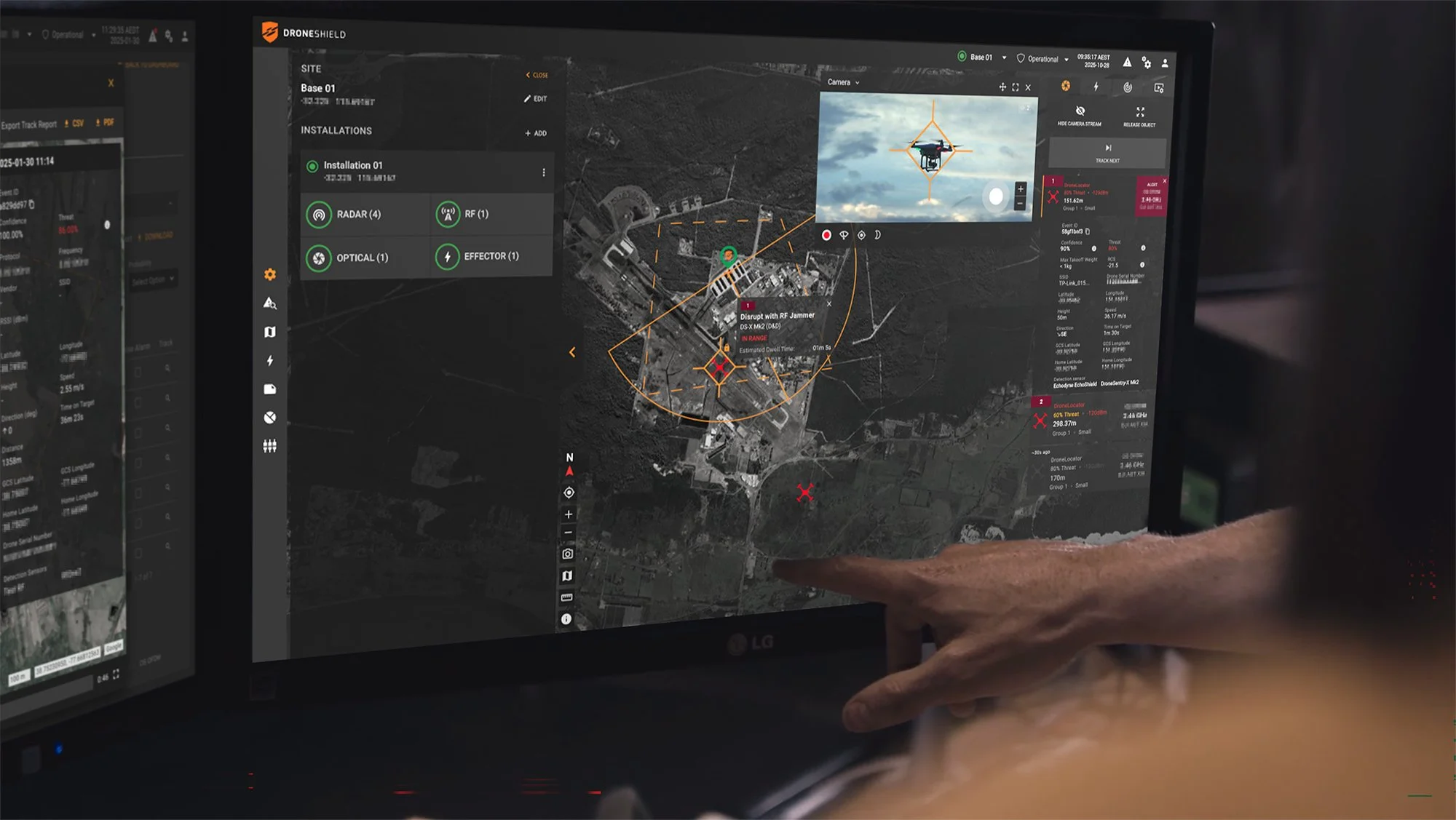
Sensor fusion is the AI driven software that knits this data together by drawing detection data from passive RF, radar, and EO/IR layers into a unified command-and-control picture.
For example, an RF detection event cues the radar layer to confirm and track. Radar confirmation prompts the EO/IR system to provide visual verification and close-range classification. Through sensor fusion, the operator receives a single fused threat picture on their command-and-control display, not three separate alerts from three separate systems that need to be interpreted. The coverage gaps that each individual sensor leaves are narrower in a layered architecture than any single-sensor deployment can achieve.
What Does a Layered Counter-UAS Architecture Look Like in a Real Deployment?
DroneShield’s preferred detection architecture applies this layered principle across fixed, vehicle-mounted, and portable deployment configurations. RF detection using ultra-wideband sensing provides the passive, covert baseline layer. Radar and EO/IR complement that layer with physical tracking and visual confirmation, covering the autonomous and no-link platforms the RF layer can't reach. SensorFusionAI integrates data from across the sensor stack into a single operating picture, reducing operator cognitive load and shortening the time from detection to classification to response decision.
The goal of layered architecture isn't a system with no limitations. It's a solution whose limitations are known, and deliberately covered by design, rather than discovered in an operational environment where the cost of a gap is measured in consequences.
Frequently Asked Questions About Drone Detection Limitations
Q: What is the biggest limitation of RF drone detection?
A: RF detection cannot identify drones that don't transmit a radio signal, such as fully autonomous or pre-programmed platforms operating without a live control link. This is a structural limitation rather than a technology gap, and it's why RF detection is typically paired with radar in layered counter-UAS architectures.
Q: Why doesn't radar work well against small drones?
A: Small, slow-moving drones present a weak radar return that can be difficult to distinguish from ground clutter or birds. Doppler processing, which filters targets by their speed relative to background clutter, has a harder time separating small, low-speed UAS from environmental noise, which increases false positive rates and can produce detection gaps against this category of threat.
Q: Is any single sensor type sufficient for counter-drone detection?
A: No single sensor type covers every scenario. RF, radar, EO/IR, and acoustic detection each have distinct blind spots tied to their underlying detection principle. Layered, multi-sensor detection is the standard approach in serious counter-UAS deployments precisely because each method's limitation is covered by another method's strength.
Assessing Detection Architecture for Known Gaps
Most detection failures in operational deployments aren't the result of equipment failures. They’re the direct result of over-reliance on any single solution and ill-designed architecture that leaves a known sensor blind spot uncovered.
Understanding the advantages and limitations of drone detection systems, and the wisdom in layered architecture, is the first step toward designing a C-UAS stack that operates at an optimal level.
Security teams and defense operators assessing current detection coverage and architecture gaps can request mission-specific support from the DroneShield team: https://www.droneshield.com/connect-with-us