

How a layered counter-UAS architecture helped protect FIFA World Cup™ operations across Kansas City.
Overview
More than 800,000 attendances were recorded across six FIFA World Cup 2026™ matches and the FIFA Fan Festival™ in Kansas City, placing extraordinary demands on the region’s public-safety infrastructure. The city hosted four group stage matches and two knockout fixtures, while its official Fan Festival welcomed more than 400,000 attendees from over 150 countries.
Protecting an event of this scale required security operations to extend beyond the stadium perimeter. Unauthorized drones presented a potential risk to spectators, event operations and restricted airspace across a geographically distributed operating environment.
To support federal, state and local authorities, DroneShield deployed a layered counter-unmanned aircraft system architecture across seven operational sites throughout Kansas City. The deployment combined DroneShield RF detection, Echodyne EchoShield® radar and Airspace Link’s AirSight® airspace-management platform to provide persistent monitoring and a shared operational picture throughout the tournament.

Image: Kansas City
The Public-Safety Challenge
Major public events create unusually complex airspace environments.
Alongside scheduled aviation and authorized drone activity, security teams must identify unauthorized aircraft operating near stadiums, public gathering areas and other protected locations. Temporary Flight Restrictions establish clear legal boundaries, but restrictions alone do not provide the real-time awareness required to identify incursions or support an operational response.
Kansas City’s World Cup security mission extended across the city rather than a single venue. Authorities required continuous visibility across multiple locations, complementary detection technologies and a means of presenting relevant airspace information to participating agencies.
The operational requirement was therefore broader than drone detection alone. It required a coordinated capability that could help agencies:
Maintain persistent awareness across multiple protected locations.
Detect and track unauthorized drone activity.
Distinguish relevant activity within a complex urban airspace.
Share information across a multi-agency security operation.
Support timely, proportionate and legally authorized responses.
The Deployment
DroneShield deployed counter-UAS capabilities across seven operational sites supporting FIFA World Cup 2026™ activities in Kansas City.
The architecture used complementary sensing modalities to strengthen airspace awareness. DroneShield’s RF-based technology detected and characterized drone communications, while Echodyne EchoShield® radars provided an additional layer of radar-based detection and tracking.
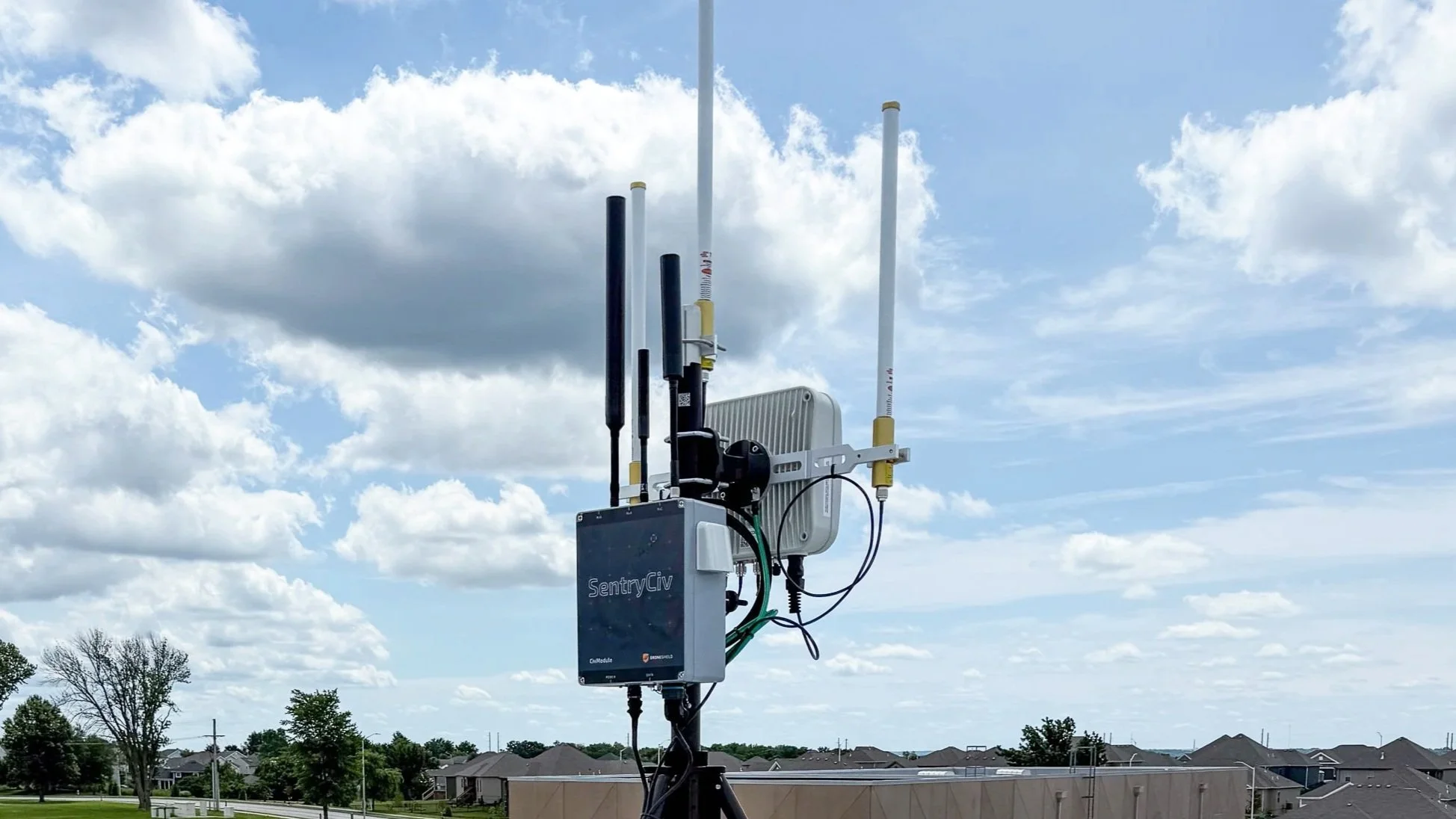
Image: Counter-drone capability
These sensor inputs were presented through Airspace Link’s AirSight® platform, helping provide participating authorities with a shared view of activity across the protected operating environment. This enabled security personnel to assess detections in context and coordinate decisions across federal, state and local agencies.
The deployment included strategically positioned fixed-site detection capabilities, supported by mobile counter-UAS assets available to authorized personnel where operationally required. The resulting architecture provided layered coverage across the city without relying on a single sensor, technology or location.

Image: DroneShield deploys layered detection capabilities over seven operational sites across Kansas City
Operational Environment
Unauthorized drone activity remained persistent throughout the tournament despite public-awareness campaigns and Temporary Flight Restrictions.
The FBI reported that 32 drones had already been seized in Kansas City by late June. By 21 July, the FBI Kansas City Field Office reported that the local total had risen to 48. These seizures were enforcement actions undertaken by authorized government agencies; DroneShield’s role was to support the broader operation with detection, tracking and situational awareness.
“By late June, the FBI reported that 32 drones had already been seized in Kansas City. By 21 July, the FBI Kansas City Field Office reported that the local total had risen to 48.”
Across the tournament’s U.S. host cities, the FBI subsequently reported more than 700 illegal drones seized, illustrating that unauthorized drone operations were not isolated incidents but a recurring public-safety challenge throughout the event.
The Kansas City deployment supported authorities by combining RF detection, radar tracking and digital airspace management within a coordinated operational framework. This helped agencies maintain awareness of protected airspace, evaluate potential incursions and make informed response decisions throughout the tournament.
Public-Safety Outcomes
The deployment demonstrated how layered counter-UAS technology can support public safety during large, distributed events.
Across Kansas City, the operation provided:
Persistent airspace monitoring across seven operational sites.
Complementary RF and radar-based drone detection.
A shared airspace picture supporting multi-agency coordination.
Greater context for assessing unauthorized drone activity.
Operational support for authorized enforcement and mitigation decisions.
A scalable model for protecting stadiums, fan zones and other public gathering locations.
The significance of the deployment was not limited to the number of drones encountered. Its value lay in providing agencies with the awareness and coordination needed to manage an evolving airspace-security challenge while hundreds of thousands of people attended events across the city.

Image: DroneShield’s drone detections identified several hot spots, enabling law enforcement to have greater airspace awareness
A Layered Model for Major-Event Public Safety
The Kansas City operation reinforced a fundamental requirement for modern public safety: protection cannot end at the physical perimeter. As drones become more accessible and capable, agencies responsible for major sporting events, public gatherings and critical infrastructure require visibility into the airspace above and around the areas they protect.
No individual sensor provides complete coverage in every environment. A layered approach combines complementary technologies, brings relevant information into a common operating picture and supports coordinated decisions by the agencies authorized to act.
During the FIFA World Cup 2026™, this approach helped Kansas City extend its public-safety posture into the airspace - supporting a coordinated security operation across one of the largest public events in the region’s history.