

The New Airspace Risk: What Security Teams Need to Know About Drone Threats in 2026
For years, “drone risk” was treated like a nuisance category: a hobby quadcopter over a fence line, an occasional airport sighting, a problem for public affairs and local police. That framing no longer fits reality.
In the last year, drones repeatedly disrupted major airports and sensitive sites in Europe, forcing shutdowns and triggering cross-border responses. In the Netherlands, multiple drone sightings suspended air traffic at Eindhoven Airport for several hours, a civilian and military facility. In Belgium, drone incursions affected airports, military bases, and a nuclear plant, with the government enlisting foreign armed forces to help track or seize the drones. In Germany, Munich Airport disruptions tied to drone sightings fueled public scrutiny and policy debate about expanded counter-drone response authorization.
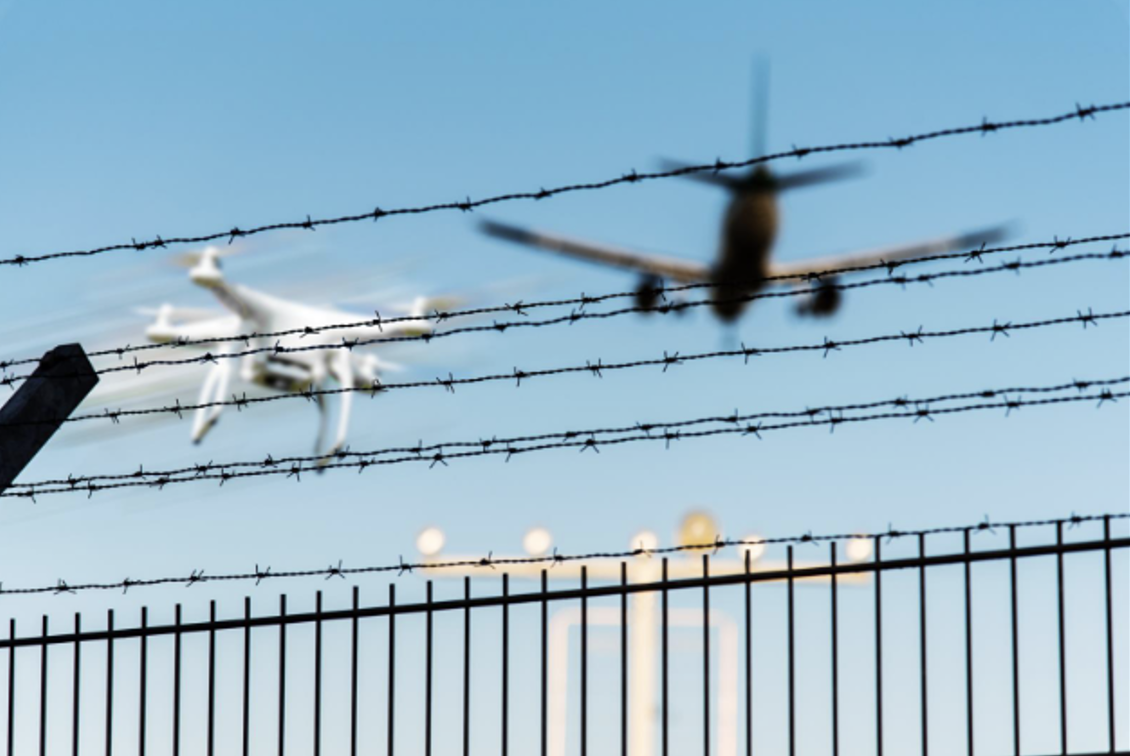
Image: Drone incursions becoming increasingly common at airports across the world
The point isn’t that every sighting signals a sophisticated campaign. It’s that the airspace above critical infrastructure is increasingly contested, and the burden of response often lands on the operator in real time, with incomplete information.
Drone Threats in 2026: What “Credible” Looks Like Now
A major shift underway is the move from “hobby nuisance” to operational threat. Security teams are increasingly dealing with drones used for:
Disruption: forcing pauses, shutdowns, or evacuations while teams verify a threat.
Collection and surveillance: persistent overflight, imagery capture, and probing of defenses—especially around sensitive sites.
Payload delivery: contraband, sabotage, improvised effects, or “just enough” impact to trigger panic and expensive response.
Kinetic effects: less common in many domestic settings, but increasingly visible globally as drones become tools of coercion and damage.
These incidents don’t just represent “more drone misuse.” They highlight a widening gap between the speed of the threat and the speed at which many organizations can interpret what’s happening and respond with confidence.
The Technical Reality: Why Drones Are Hard to Secure Against
Drone security gets misunderstood because people picture a “small aircraft” that should be obvious and easy to stop. In practice, a drone is a stack of systems operating inside noisy, cluttered environments, while security teams are constrained by safety requirements, regulation, and local authorities.
One reason airport environments are so sensitive is that counter-UAS detection and response must avoid creating new risks to aviation systems. The FAA’s own work on drone detection has emphasized careful evaluation and testing, including safety considerations around operating near the National Airspace System (NAS).
A typical drone presents multiple technical “surfaces” a security team may or may not be able to observe in the moment:
Navigation (GNSS): Many systems rely on civil GPS signals; the civil GPS L1 signal is centered at 1575.42MHz.
Command & Control (C2): The control link varies by platform and may be direct RF, Wi-Fi-like, cellular, or intermittent (depending on autonomy and the mission).
Payload/Video/Telemetry link: Many commercial systems operate in widely used bands; DJI, for example, publishes transmission specifications spanning parts of the 2.4GHz / 5GHz ranges (country dependent).
Identification (Remote ID, where applicable): In the U.S., FAA Remote ID rules require certain drones to broadcast identification and location information from takeoff to shutdown (subject to rule scope and compliance).
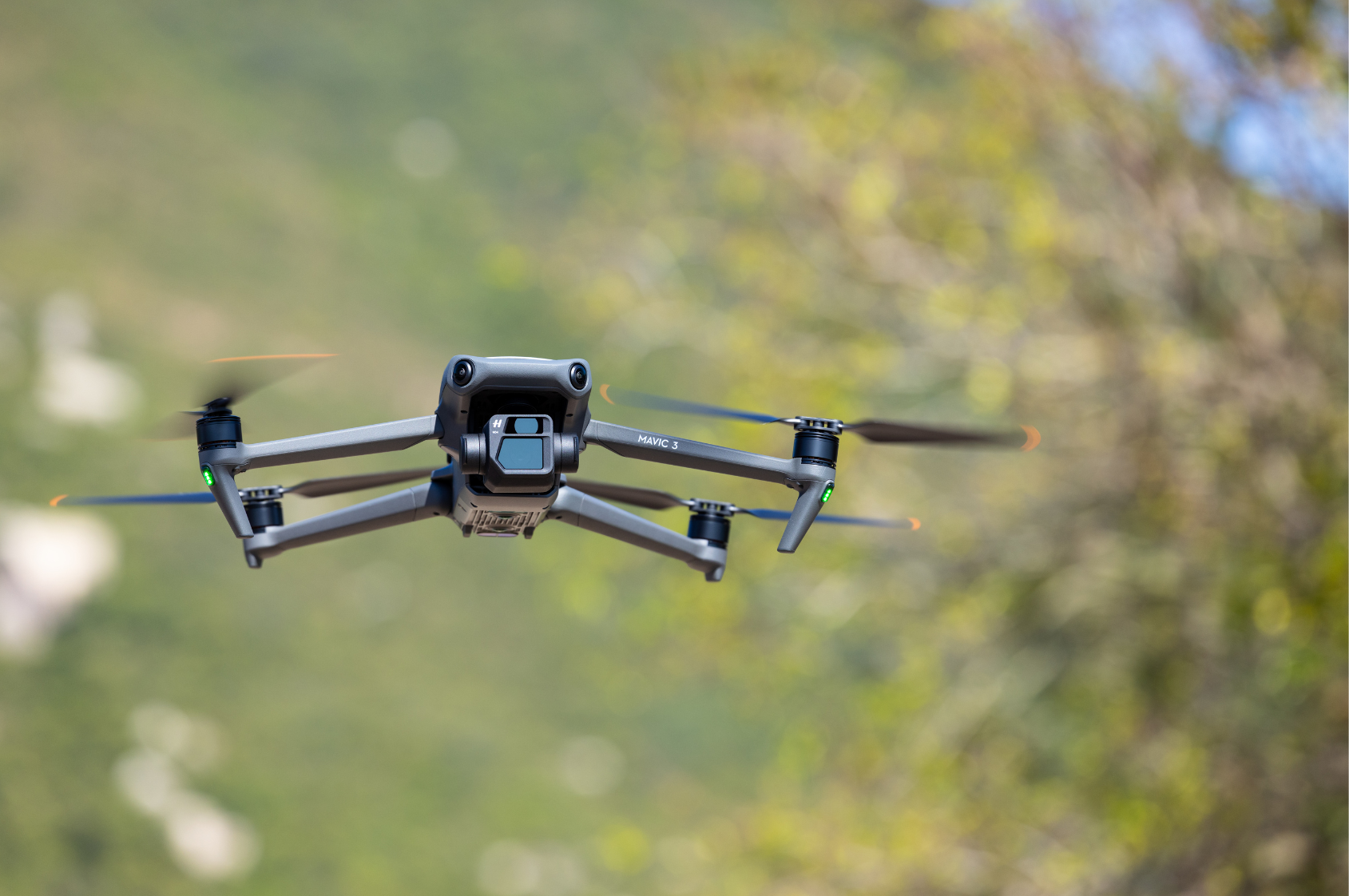
Image: DJI Mavic 3 Drone
Some drones are RF-loud; others can be RF-quiet. Some comply with Remote ID and others won’t. Some are easy to visually confirm; others blend into clutter. Detection is as much about interpreting partial, imperfect signals as it is about spotting a flying object.
Modern counter-drone architectures lean on complementary sensor technology because each modality has real-world limits:
Radar: strong for wide-area detection and tracking, but performance can be affected by terrain, line-of-sight constraints, and cluttered environments.
RF detection: effective when drones emit recognizable signals but limited against low-emission profiles and dense RF environments.
EO/IR cameras: valuable for confirmation/identification, but depend on visibility, field-of-view, and cueing (you can’t “stare everywhere” at once).
Acoustic sensing: can help at shorter ranges but is sensitive to background noise and weather.
For aviation environments specifically, there’s an added layer: GNSS interference and navigation disruption are serious operational risks that increase workload and complexity for pilots and controllers; one reason aviation authorities treat “response” as a tightly governed domain.
The Real Threat to Airspace Security: Misreading Who Is a Target
A common trap is assuming, “We’re not a target.” In 2026, that assumption is increasingly fragile.
If an organization operates critical infrastructure such as airports, utilities, ports, rail, government facilities, stadiums, or major public venues, it already holds what malicious actors value: visibility, disruption leverage, and asymmetric access. The question isn’t only whether an incursion will occur; it’s what happens when uncertainty arrives faster than decision-making.
Volume reinforces the point. The FAA says reports of drone sightings near airports “remain high,” and that it receives more than 100 such reports near airports each month.
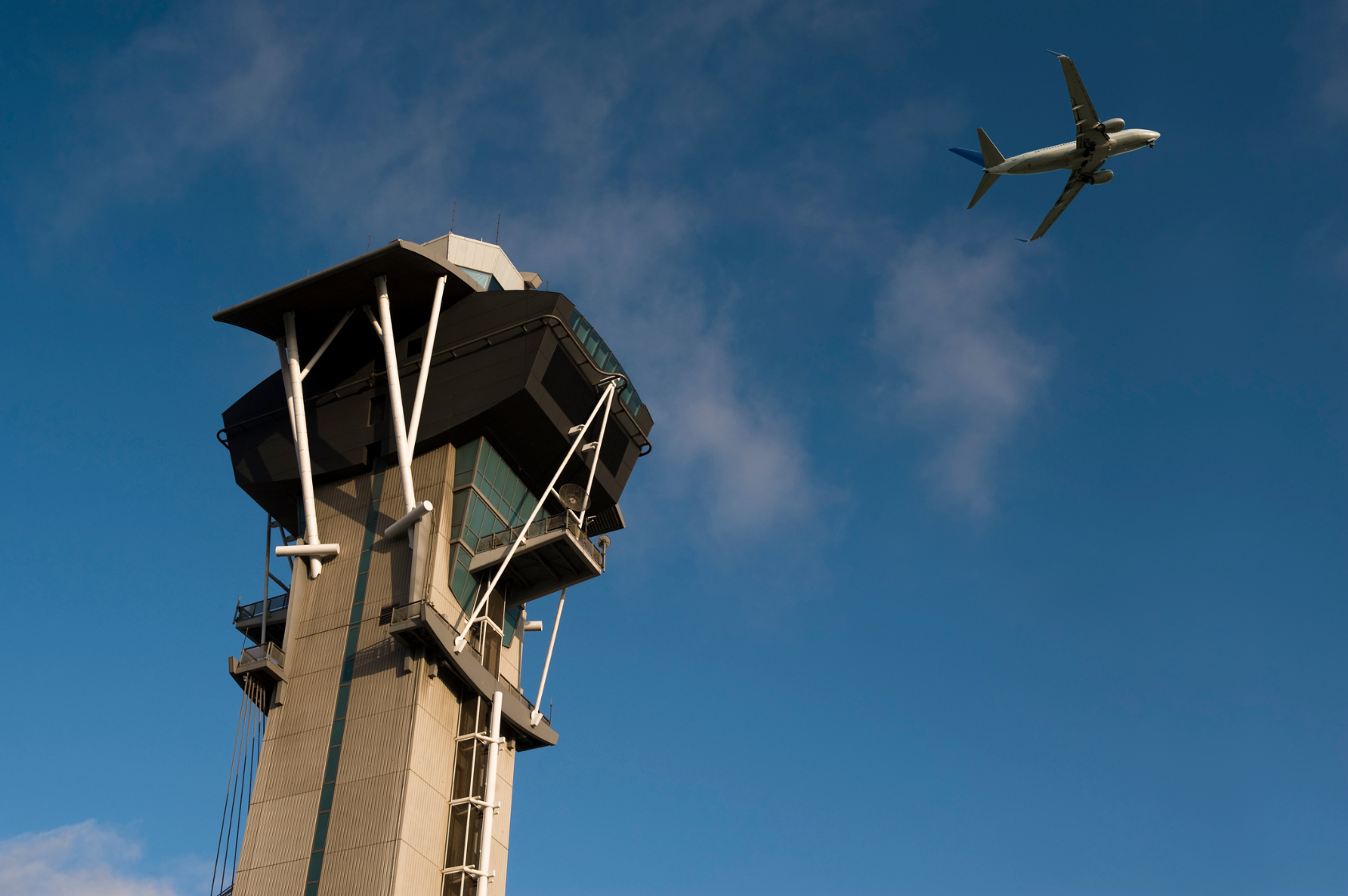
Image: Los Angeles International Airport
Drones Flip the Economics of Disruption
The defining characteristic of the drone era isn’t simply that drones exist. It’s that drones change the economics of disruption.
A low-cost platform can impose a high-cost response: shutdowns, perimeter sweeps, diverted resources, emergency notifications, investigative overhead, and executive attention. Even when an incident ends without damage, the organization still pays, in downtime, in overtime, and in the public record that a security event occurred.
That imbalance is why 2026 feels different. Traditional security spending is often justified by probability (“How likely is this?”). Drone risk forces a shift to consequence (“How expensive is even one interruption?”). In environments where minutes matter, airports, utilities, stadiums, ports, and data centers, drone incursions behave less like isolated incidents and more like a repeatable business interruption tactic, because the barrier to attempt is low and the uncertainty it creates is immediate.
The implication is straightforward: counter-drone capability is no longer a niche security accessory. For many organizations, it becomes part of operational resilience, closer in spirit to cybersecurity monitoring than to a one-off hardware purchase. The goal is not perfection. The goal is reducing confusion, shortening decision time, and limiting the duration and impact of disruption when an incursion occurs.
The Future of Counter-Drone Security
In practice, organizations fail when they lack clarity under pressure: what is it, where is it, what is it doing, and what can be done legally and safely next?
Early detection and rapid classification are what reduce uncertainty. In the real world, that typically means a layered approach to airspace awareness that can function in clutter, using complementary sensing (for example, optical, radar, and RF) tied together through command-and-control software so operators can track, interpret, and coordinate response.
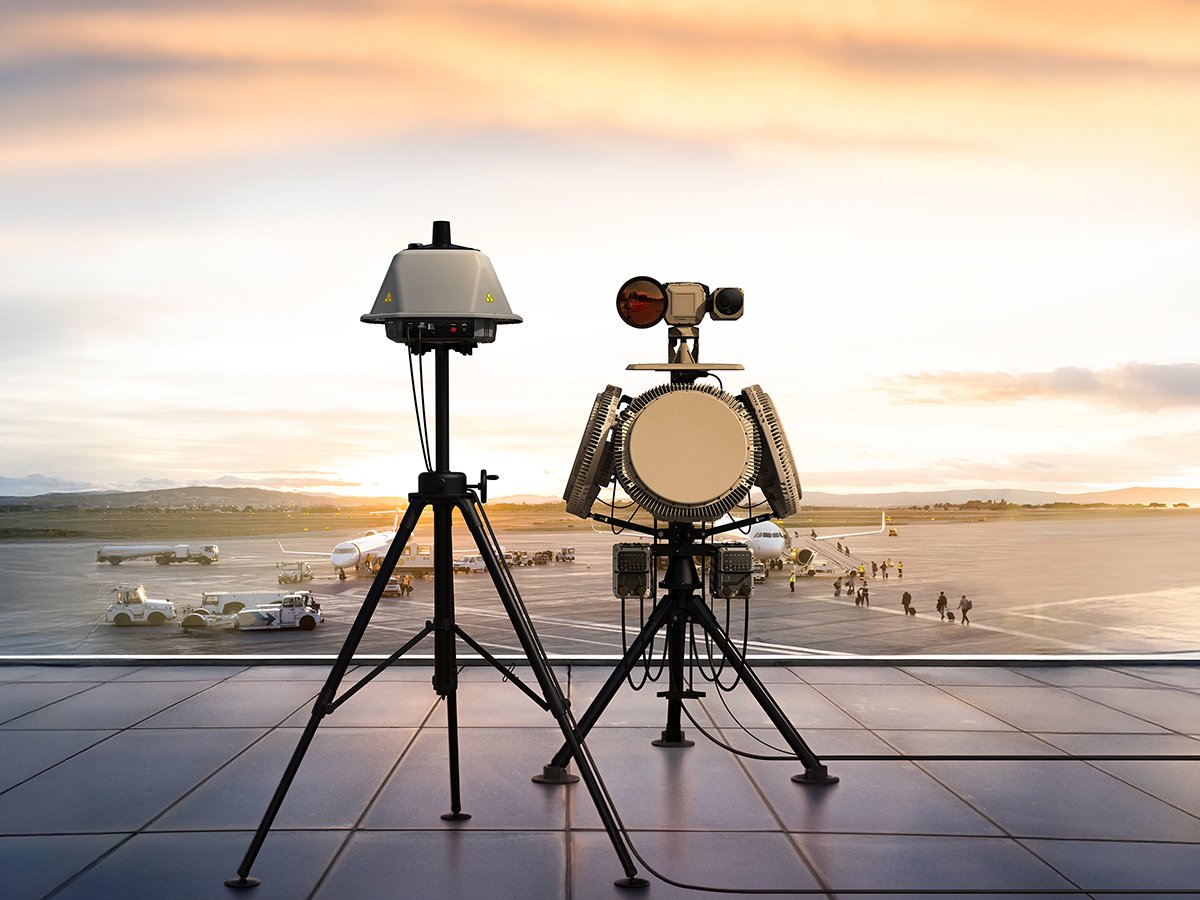
Image: DroneShield’s DroneSentry layered defense solution provides RF, Radar, and EO/IR detection and protection