

Safeguarding Energy Infrastructure from Drone Intrusions
Drones have dominated the conversation when it comes to airspace security, regardless of sector. As Unmanned Aerial Systems (UAS) become more accessible, more capable, and more autonomous, their presence in low-altitude airspace has shifted from novelty to necessity, and increasingly, to risk. While drones deliver undeniable benefits for inspection, monitoring, and maintenance, they also introduce new vulnerabilities, particularly for critical energy infrastructure.
The energy sector now sits at the center of this challenge. Power generation facilities, substations, pipelines, refineries, and renewable energy sites are highly distributed, heavily automated, and foundational to economic and societal stability. As a result, they are uniquely exposed to unauthorized or malicious drone activity. This convergence of operational dependence and aerial vulnerability has made counter-drone capability an essential component of modern energy security, not a future consideration.
The Real and Present Threat to Energy Networks
Energy systems sit at the intersection of national security, economic stability, and public welfare. A successful disruption can plunge cities into darkness, interrupt heat supply in winter, and undermine essential services.
Recent events across multiple regions vividly illustrate how drones are being used to attack or disrupt critical energy infrastructure:
In January 2026, Russian forces launched a large drone strike campaign against Ukraine’s power grid, knocking out electricity for tens of thousands of households and damaging key energy facilities across multiple regions. The offensive highlights how readily available drones are being integrated into broader aerial attacks on energy systems during conflict.
Similarly, drone strikes have recently cut power to hundreds of thousands of homes in southern Ukraine, demonstrating how energy disruption can ripple through civilian life and the economy amid geopolitical crises.
In northern Iraq, a drone strike on a major natural gas field triggered fires and power outages, underscoring the potential for even non-state drone actors to threaten regional energy stability.
These assaults are not isolated. Global analyses confirm that drones have been used against infrastructure assets in conflicts from the Middle East to Eastern Europe, often by actors seeking maximum operational or psychological impact with minimal exposure.
This trend isn’t limited to war zones. Critical infrastructure in stable regions is also at risk from unauthorized or negligent drone flights, prompting aviation authorities and infrastructure regulators to expand awareness and mitigation guidance.

Image: Energy sectors are particularly vulnerable to drone incursions
Why the Energy Sector Is Especially Vulnerable
Energy systems are inherently exposed:
Distributed Assets: Power plants, substations, pipelines, and storage sites span wide geographical areas (often in remote locations) leaving gaps in visual monitoring and traditional perimeter security
Automation and Connectivity: Modern grids and refineries rely on interconnected digital systems that can be disrupted indirectly through physical attacks on sensors or communication nodes
Economic Impact: Outages or damage at a key facility can ripple through markets, affecting production, transportation, and international energy prices
Drone misuse poses multiple types of risk:
Espionage and Surveillance: Unauthorized drones can conduct covert reconnaissance on asset layouts, security practices, or sensitive personnel movements
Physical Damage: Even small drones can deliver explosive payloads or cause structural damage through collisions, especially when operated in swarms
Operational Disruption: Intrusions can force precautionary shutdowns or reconfiguration of core systems, interrupting service continuity
Energy infrastructure cannot afford the risk of unauthorized drones entering controlled airspace, particularly as geopolitical tensions and domestic security threats evolve.
The Dual-Use Challenge of Drone Technology
Drones bring undeniable value to energy operators. They enable:
Rapid, detailed visual inspection of hard-to-reach infrastructure
Real-time condition monitoring and maintenance prioritization
Reduced personnel risk in hazardous zones
Yet the same capabilities that make drones valuable for inspection also make them effective tools for reconnaissance, covert observation, or attack when exploited maliciously.
This dual-use dilemma means that blanket bans on drones are neither practical nor desirable; instead, energy operators need nuanced, technology-driven solutions that distinguish between authorized and unauthorized drones in real time.
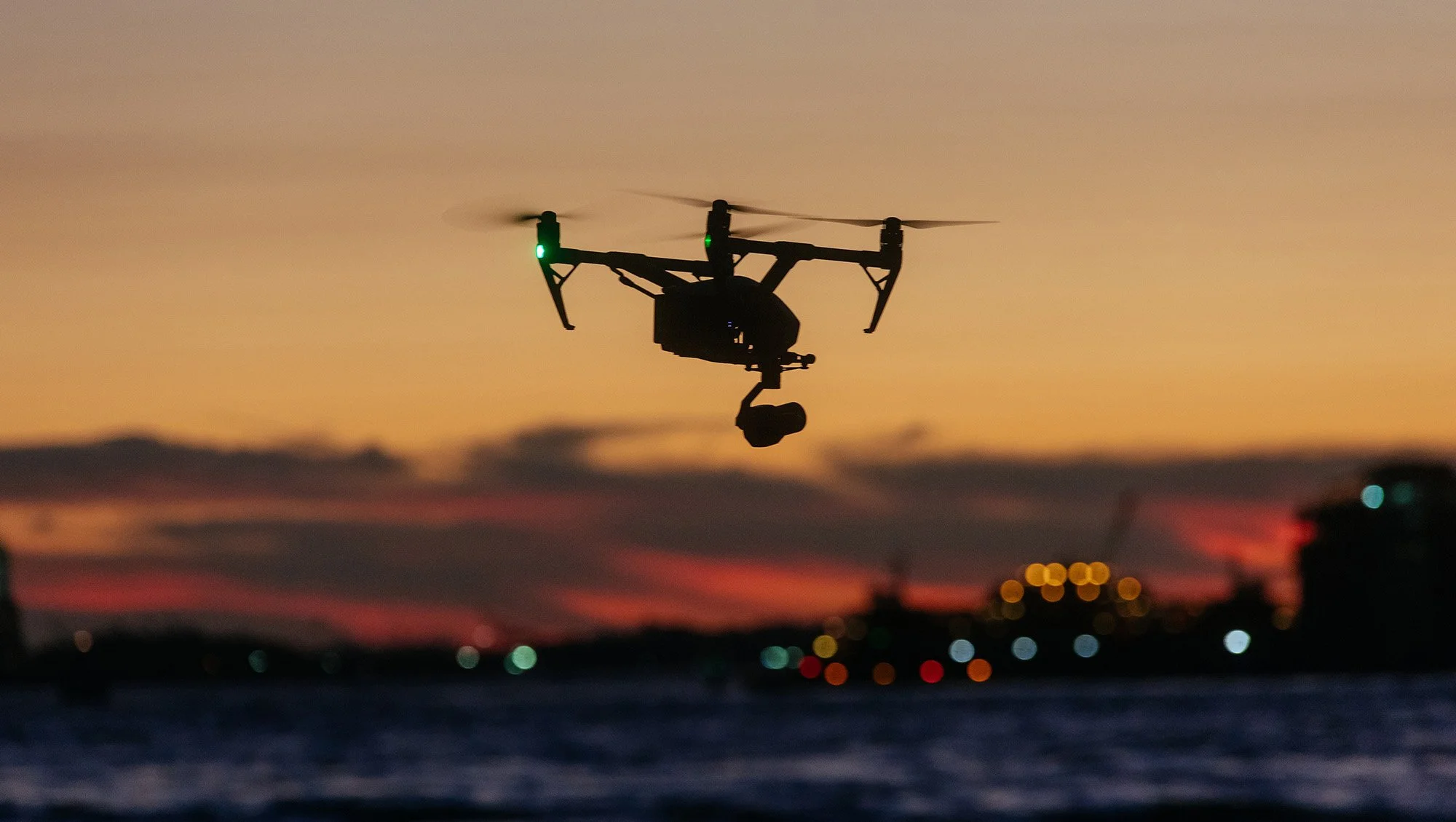
Image: Drones pose an unprecedented risk to operations
Counter-UAS (CUAS): The Backbone of Modern Airspace Security
To safeguard critical facilities, energy operators are increasingly turning to Counter-Unmanned Aircraft Systems (CUAS), interoperable solutions designed to detect, identify, track, and mitigate unauthorized or hostile drones.
What CUAS Systems Do
A robust CUAS strategy typically includes:
Detection: Multi-sensor detection technologies (radar, radio frequency, optical, and acoustic) monitor low altitude airspace for UAS activity
Identification: Once detected, CUAS systems use AI, machine learning, or signature profiling to verify whether an object is a drone and classify it
Tracking: Continuous tracking provides real-time path and velocity data for operational awareness
Response: Depending on regulatory allowances and threat assessment, CUAS tools can disrupt, repel, or neutralize unauthorized drones, or alert security teams for human-led response
Crucially, these systems aim to differentiate friendly from hostile drones, preserving legitimate drone use for inspection and operational tasks while defending against malicious incursions.
Layered Defense: Best Practices in CUAS Deployment
Effective defense against drone threats isn’t a single tool or sensor, it’s a multi-layered ecosystem that provides overlapping, complementary capabilities.
Strong CUAS strategies combine:
1.Radar and RF Detection
Radar systems scan broad airspace and detect moving objects at long ranges
Radio Frequency (RF) sensors identify communication links between UAS and controllers
Combined, they enable early alerts before a drone approaches sensitive zones
2. Optical and Infrared Verification
Cameras and thermal imaging provide visual confirmation and classification, essential for distinguishing birds, balloons, or authorized drones from genuine threats.
3. Acoustic Layer
Complement radar and RF by detecting unique sound signatures of drone propellers, useful in cluttered, RF-dense, or GPS-denied environments.
4. Command-and-Control (C2) Integration)
Centralized C2 platforms allow security teams to correlate sensor data, visualize airspace activity, and coordinate responses quickly and effectively.
A layered defense both increases the likelihood of detection and reduces false positives, a key challenge in lower-airspace monitoring. DroneShield’s DroneSentry solutions are specifically designed to create layered critical infrastructure CUAS defense capabilities that allow for early detection of drone threats, with optional disruption measures that can be incorporated if local laws and regulations permit.
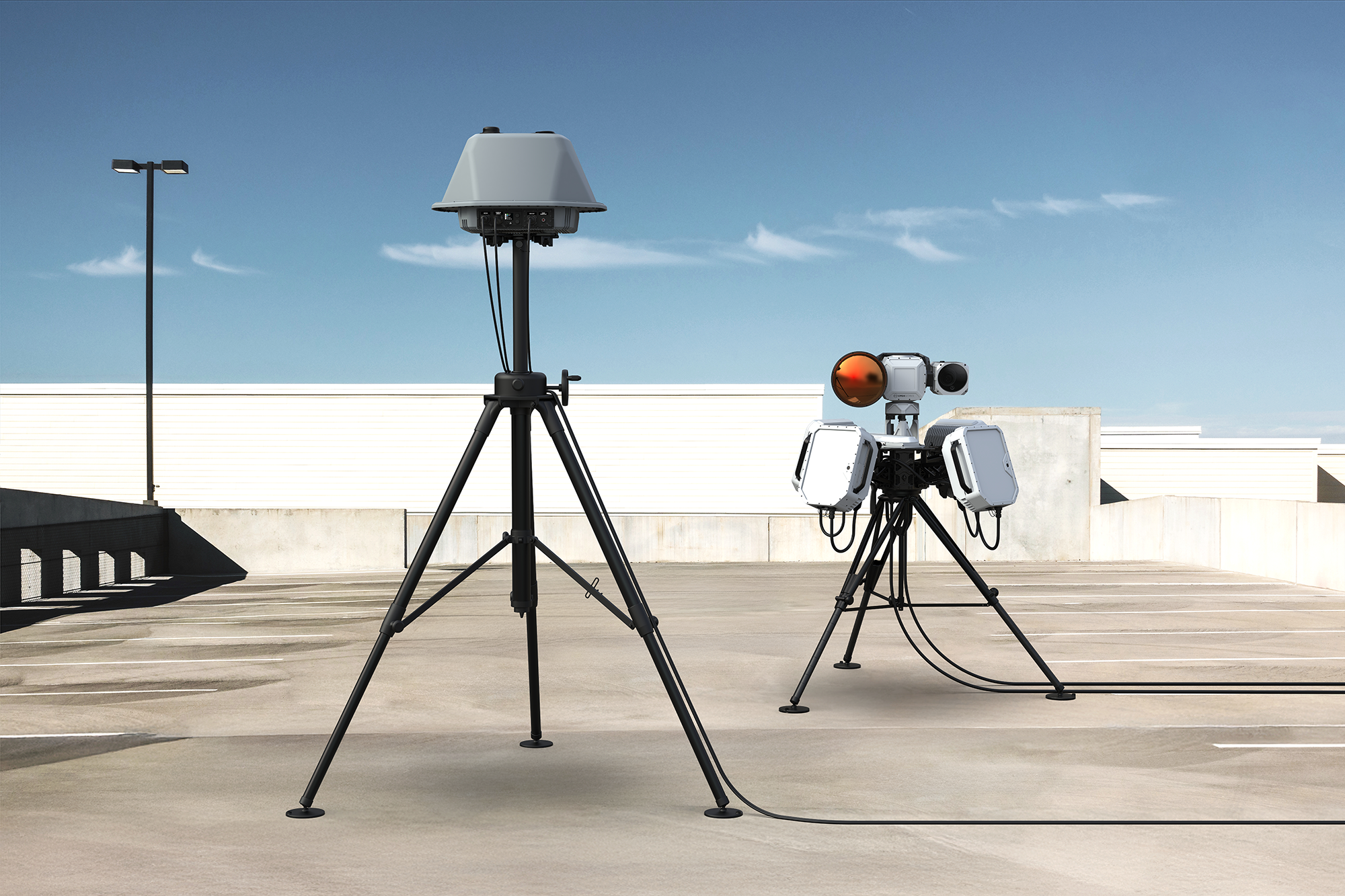
Image: A DroneSentry solution configuration
Building Resilience in the Energy Sector
The challenge of safeguarding energy infrastructure from drone threats is multifaceted, encompassing technology, policy, and operational readiness.
Drones will continue to play an important role in modernizing energy operations. But without sophisticated detection and response solutions in place, they also introduce vulnerabilities that can be exploited by hostile actors.
A proactive approach, one that embraces multi-layered CUAS technology, regulatory compliance, and strategic planning, empowers energy operators to protect their assets, ensure service continuity, and safeguard public welfare in an age when the sky above is as contested as any battlefield below.