Safer Skies, Real Authority: What the NDAA Means for Public Safety Counter-Drone Operations
The passage of the Safer Skies Act under the National Defense Authorization Act (NDAA) marks a pivotal moment for public safety agencies across the United States. For the first time, legislative authority, operational clarity, and funding pathways are beginning to align, unlocking the ability for state, local, tribal, and territorial (SLTT) agencies to actively protect communities from malicious and negligent drone activity.
This is not theoretical progress. It is actionable authority, and it changes how public safety prepares, procures, and operates counter-UAS (CUAS) capabilities moving forward.
Why the Safer Skies Act Matters
Unmanned aircraft systems have evolved faster than the regulatory frameworks designed to control them. Public safety agencies have long faced a dangerous gap: clear responsibility to protect people, but limited authority to act against airborne threats.
The Safer Skies Act begins closing that gap by:
Expanding counter-drone authority beyond federal agencies
Clarifying operational roles for public safety and critical infrastructure
Enabling proactive airspace protection, not just incident response
Creating a legislative foundation for sustained funding and training
For law enforcement, emergency responders, corrections, and infrastructure operators, this is the difference between awareness and action.
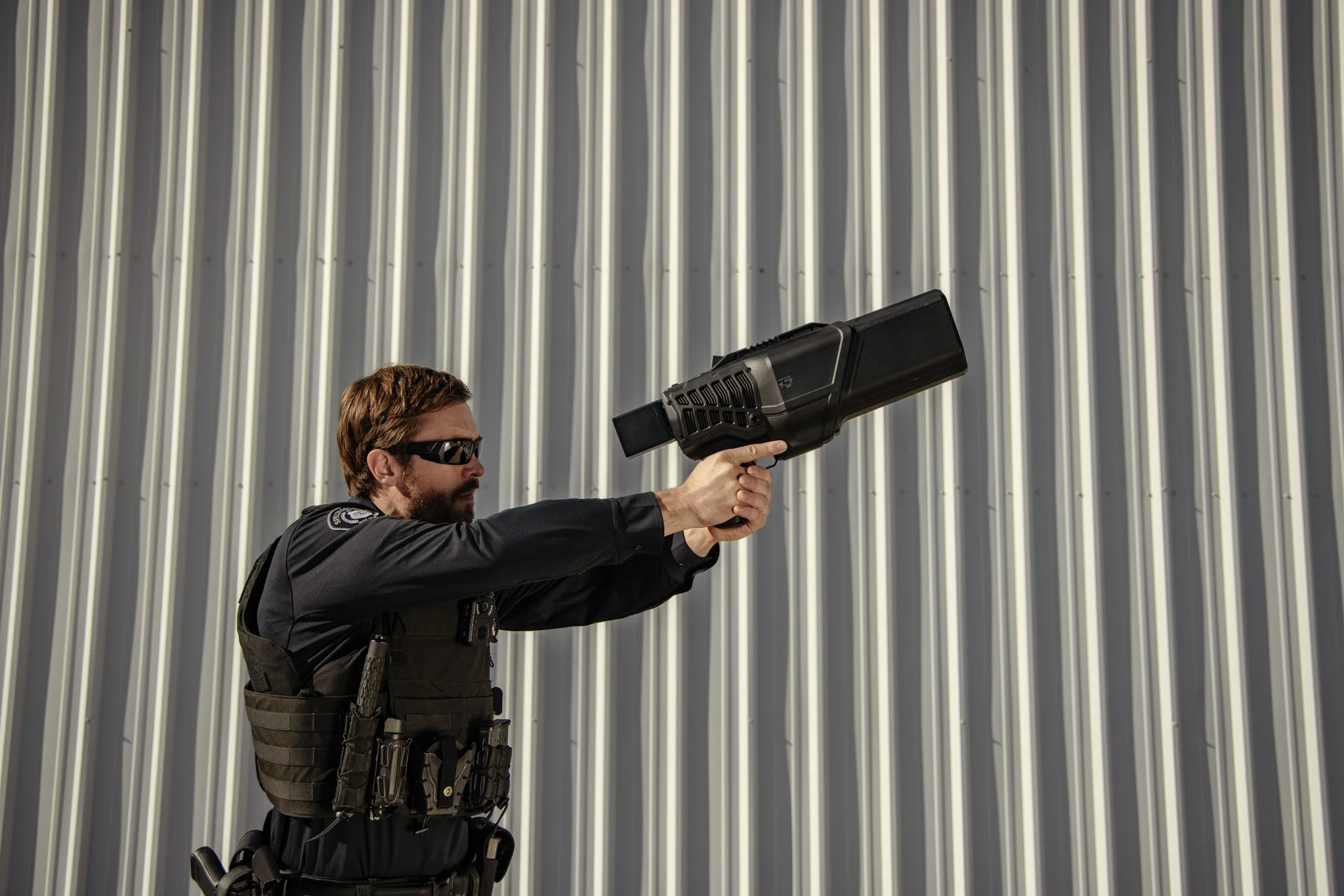
Image: DroneShield’s DroneGun Mk4 used by law enforcement to mitigate unauthorized drone activity during public safety operations.
From Detection to Protection
Historically, many agencies were restricted to drone detection only, able to see a threat, but not mitigate it. The new NDAA language recognizes that detection without response is insufficient in today’s threat environment.
The Safer Skies Act supports a layered approach to public safety airspace protection:
Detection & Identification – Understanding what is in the air, who is operating it, and whether it poses a risk
Command & Control (C2) – Fusing sensor data into a single operational picture
Decision Authority – Enabling trained operators to act within defined legal frameworks
Mitigation & Deconfliction – Safely resolving threats while protecting lawful airspace users
This framework aligns directly with how modern public safety operations already function—structured, accountable, and outcomes-driven.
What This Means for Public Safety Agencies
The implications are immediate and practical:
Clearer Procurement Pathways
With authority codified, agencies can now pursue long-term C-UAS programs, not short-term pilots. This supports:
Budget justification
Multi-year planning
Standards-based deployments
Stronger Interagency Coordination
The NDAA emphasizes collaboration between federal, state, and local stakeholders, enabling shared situational awareness and coordinated responses—especially for large-scale events, critical infrastructure protection, and major public gatherings.
A Shift to Operator Outcomes
The focus moves away from individual sensors or standalone tools and toward mission outcomes:
Protecting communities
Securing airspace
Enabling safe operations for first responders and lawful drone users alike
Funding, Authority, and the Road Ahead
Legislation alone does not solve the problem, but it unlocks everything else. With authority in place, funding mechanisms follow. Training standards evolve. Technology adoption accelerates.
For public safety leaders, now is the time to:
Assess airspace risk across jurisdictions
Define operational requirements for C-UAS
Invest in systems that are scalable, interoperable, and legally compliant
A Turning Point for Public Safety Airspace Security
The Safer Skies Act is more than a policy milestone. It is a signal of intent, that the U.S. is taking airspace security seriously at every level of government.
For public safety agencies, the question is no longer if counter-drone operations will be part of the mission, but how prepared they are to implement them responsibly and effectively.
DroneShield has spent over a decade focused exclusively on counter-drone technology, supporting military, government, and public safety customers globally. The Safer Skies Act validates what operators have long known: airspace security is public safety.
As authority expands, the priority must remain clear: protecting people, infrastructure, and communities through proven, operator-centric solutions that are interoperable with existing public safety operations.