

DroneShield Expands Urban Airspace Security Capabilities Ahead of FIFA World Cup 2026
Multi-site detection and airspace coordination initiative supports regional drone security across Kansas City metro
Kansas City, MO – 27 May 2026 – DroneShield is expanding urban airspace security capabilities ahead of FIFA World Cup 2026 through a regional multi-site deployment designed to support persistent low-altitude airspace awareness across the Kansas City metropolitan area.
The initiative, led by the Kansas City Police Department (KCPD) in partnership with Airspace Link’s AirHub® Portal, and regional public safety stakeholders, combines operational airspace coordination, distributed radar coverage, radio frequency (RF)-based drone detection, and integrated situational awareness capabilities to help support security operations across multiple jurisdictions and operational environments ahead of the tournament.
DroneShield’s role within the deployment is as the primary detection and threat response layer, supporting multi-site airspace awareness workflows through RF sensing, sensor fusion, operational coordination, and counter-UAS capabilities.
The deployment is designed for complex urban environments where authorized drone operations, public safety aviation activity, media coverage, and potential unauthorized drone activity may occur simultaneously.
The system supports coordinated airspace awareness and operational response across these overlapping activities throughout the broader security environment.
Tom Adams, Director of Public Safety at DroneShield, and a retired FBI agent with 20 years specializing in counterterrorism and public safety, said: “Ten years ago, most cities weren’t thinking about drone threats at this scale, Kansas City is now helping pioneer a layered airspace security model built for the realities of modern urban environments.”
“Protecting FIFA World Cup 2026 requires a new level of airspace coordination,” added Major Greg Williams of the Kansas City Police Department. “Kansas City is building a long-term framework that helps public safety agencies safely manage growing drone activity across the metro area.”
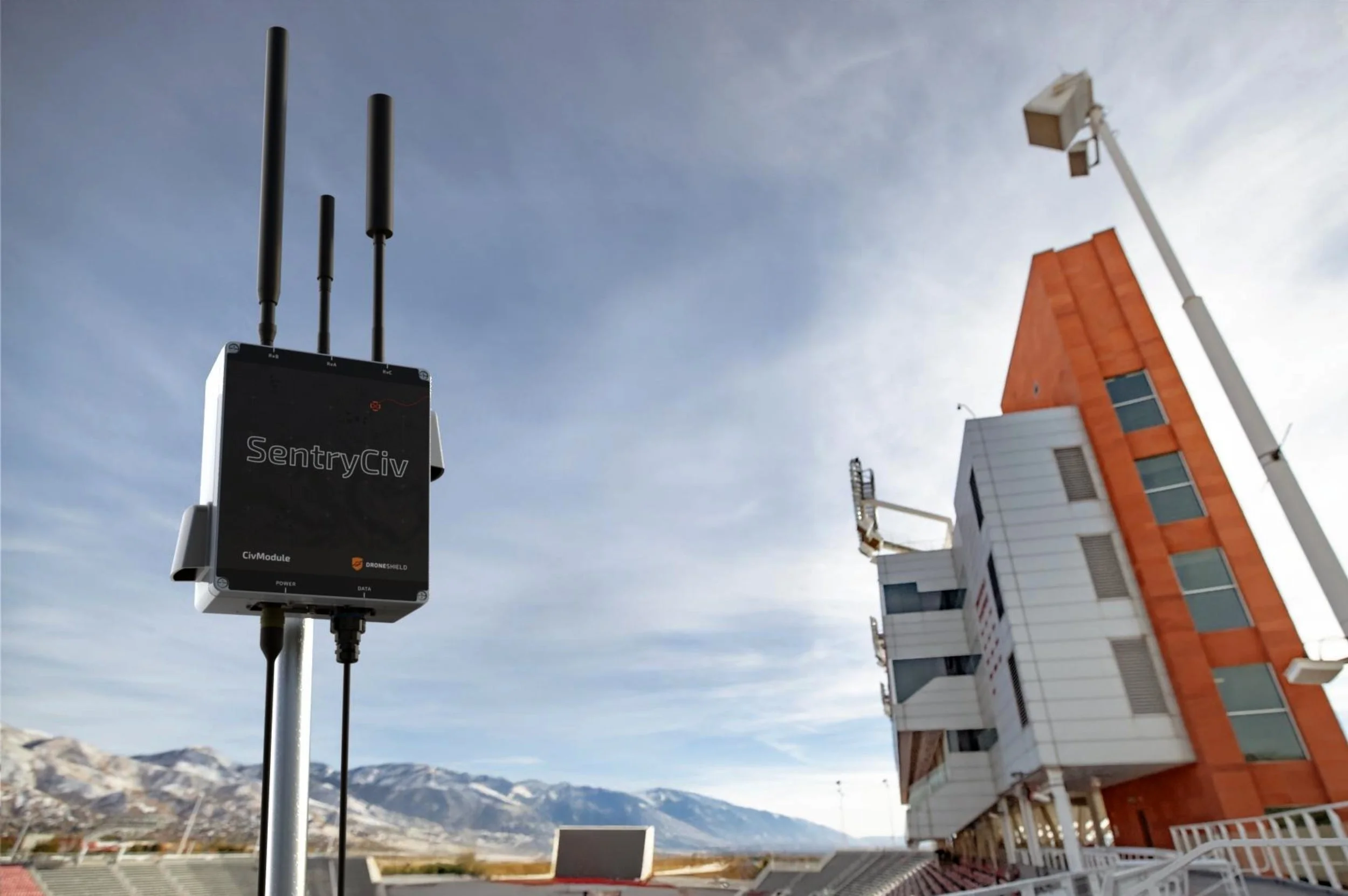
Image: DroneShield’s SentryCiv provides fixed-site drone detection for venues, public safety, and critical infrastructure
Securing An Increasingly Congested Urban Airspace
The deployment incorporates radar technologies from Echodyne alongside DroneShield’s detection and operational awareness capabilities, creating a layered airspace security architecture intended to support persistent visibility across the broader operational environment.
Together, the participating organizations are helping establish a coordinated operational framework designed to support airspace awareness, drone detection, authorized drone operations, and public safety response activities ahead of one of the world’s largest sporting events.
Unlike traditional single-site security deployments, Kansas City’s approach emphasizes persistent regional airspace awareness across multiple operational areas and jurisdictions, reinforcing the growing need for scalable urban airspace resilience strategies capable of supporting both major event security and long-term public safety operations.
“Maintaining visibility across complex urban airspace environments requires persistent awareness and layered sensing capabilities that can support dynamic operational conditions,” said Eben Frankenberg, CEO at Echodyne. “Kansas City represents an important example of how public safety agencies and technology partners are working together to support scalable, multi-site airspace security operations ahead of major public events.”
"What Kansas City is building is larger than a World Cup security deployment. This is foundational infrastructure for the future of coordinated urban drone operation," said Michael Healander, Co-Founder, President and CEO of Airspace Link.