

DroneShield Expands C2 Interoperability Through Partnership with OpenWorks Engineering Optical Sensors
24 March 2026 – DroneShield, a global leader in counter-unmanned systems (CUxS) solutions, today announced interoperability between DroneSentry-C2 command-and-control (C2) software, and optical sensing technologies from OpenWorks Engineering. The partnership strengthens DroneShield’s ability to unify multi-domain sensor inputs within a single operational C2 environment, delivering enhanced detection, tracking, and decision superiority for end users.
OpenWorks Engineering is a UK-based technology company specializing in advanced optical sensor systems and imaging solutions for defense, security, and industrial applications. With a heritage rooted in delivering modular, high-resolution optical sensing for challenging environments, OpenWorks remains focused on precision detection, identification, and continuous tracking of airborne objects.
Interoperability with OpenWorks Engineering optical sensors adds another high-value option to DroneShield’s ecosystem, enabling customers to enhance visual detection, tracking, and identification capabilities within a single, cohesive command-and-control environment.
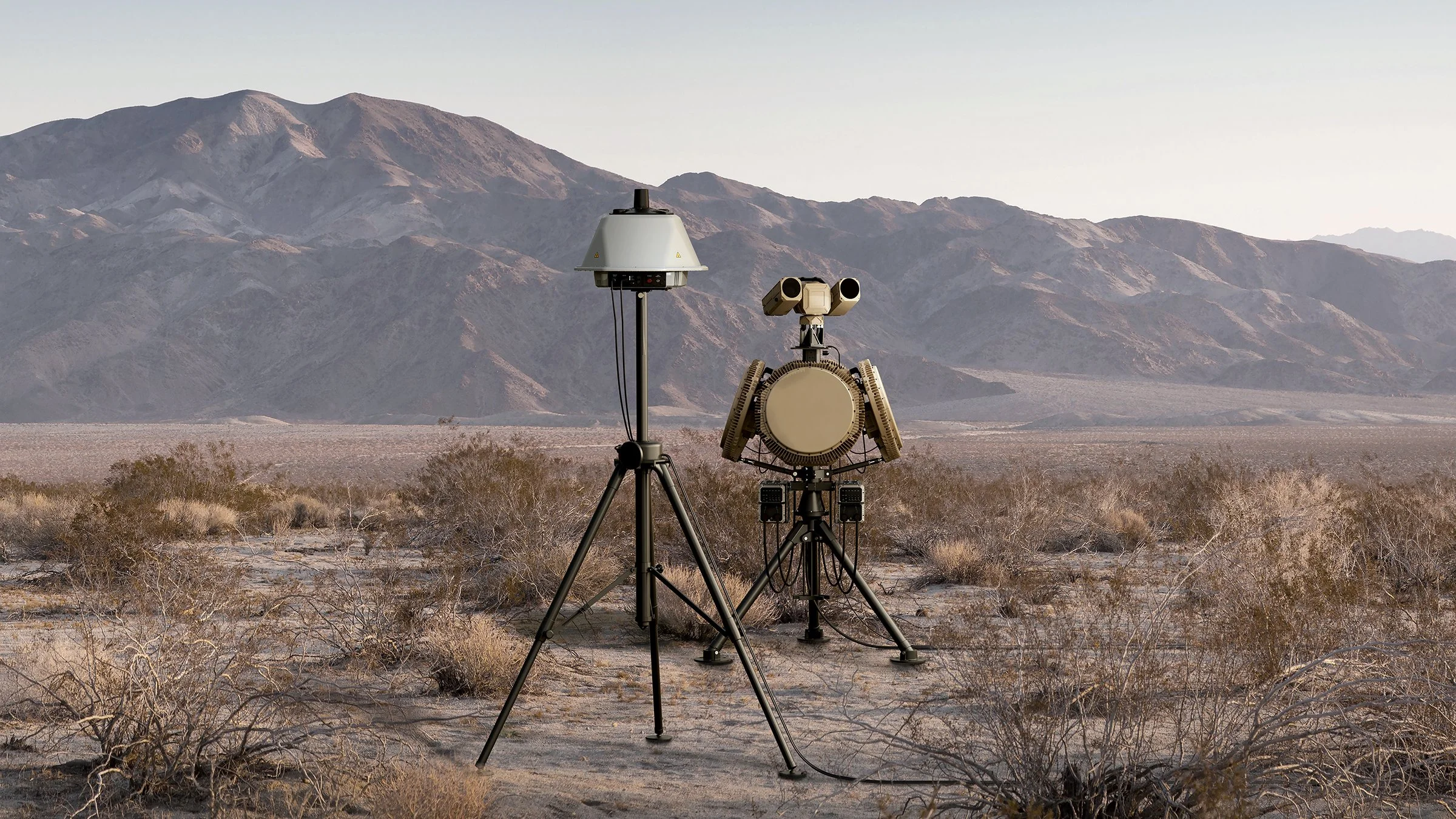
Image: DroneShield’s DroneSentry sample configuration with OpenWorks Engineering optical sensor
DroneSentry-C2 as the Operational Anchor
While additional sensors enhance coverage, operational advantage is achieved at the command-and-control layer. DroneSentry-C2 serves as the authoritative decision engine that combines and prioritizes inputs across RF, optical, and other supported modalities.
Within the DroneSentry-C2 platform, powered by its SensorFusion engine sits DroneShield’s proprietary VisionAI, an AI-driven machine vision capability designed to deliver autonomous visual detection, validation, and tracking of drone threats using optical sensors such as OpenWorks. VisionAI enhances the common operating picture by providing real-time visual confirmation once a drone is detected and cued by the broader sensor network. VisionAI automatically slews the camera to the target, validates the threat, and maintains persistent tracking using advanced machine learning, without requiring manual or continuous operator input. VisionAI also assists in assessing payload indicators, modifications, and countermeasure effectiveness, while securely storing video for post-event review and forensic analysis, strengthening layered airspace security across the DroneSentry-C2 ecosystem.
Rather than presenting operators with parallel systems or fragmented dashboards, DroneSentry-C2 provides a unified operational interface where sensor data is fused, contextualized, and prioritized in real time, with DroneSentry-C2 Enterprise enabling coordinated oversight across geographically dispersed and enterprise-scale deployments.
“Operators need clarity, not complexity,” said Angus Bean, DroneShield’s Chief Product Officer. “Expanding our ecosystem with additional optical sensing technologies from OpenWorks Engineering gives customers more options to tailor their deployments, while SensorFusionAI ensures all inputs are combined into a clear, operational picture.”
“Collaboration with DroneShield enhances channels through which intelligent and autonomous vision systems from OpenWorks can be deployed. We share DroneShield’s approach to modularity, creating configurable ecosystems of technology that are interoperable with end-users’ existing systems. We look forward to further strengthening our relationship with DroneShield throughout 2026,” stated James Cross, Chief Commercial Officer for OpenWorks.

Image: DroneShield demonstrating DroneSentry-C2 in Finland.
A Growing Marketplace for Airspace Security
DroneShield’s expanding ecosystem reflects a broader vision: creating a marketplace of interoperable technologies that empowers operators to configure, evolve, and scale their CUxS capabilities over time.
By prioritizing open architecture, interoperability, and AI-driven intelligence, DroneShield is positioning its platform as the foundation for layered, multi-sensor airspace security strategies, without constraining customers to a single hardware pathway.
This ecosystem model supports procurement flexibility, accelerates deployment timelines, and aligns with the realities faced by defense, security, and public safety organizations operating in rapidly changing threat environments.