

NATO Bold Machina 2025
Bold Machina (BOMA) is an annual event held at various bases around the world. The platform supports a culture of innovation and creates opportunities to provide strategic advantage to NATO Maritime Special Operations Forces (SOF). This operational experiment was organized by NATO ALLIED SOFCOM and supported by NATO STO CMRE, the Centre for Maritime Research and Experimentation, with active participation from the Netherlands, the host nation. It brought together a community of SOF, technology providers, and organizations responsible for Controlled Unclassified Information (CUI), which needed careful safeguarding due to its sensitive nature.
The DroneSentry-X Mk2 (Detect Only) was deployed as the primary radio frequency (RF) layer of the installation. The system was instrumental to ensuring the experiment was a success, effectively detecting threats as intended.
The DroneSentry-X Mk2 (Detect Only) was deployed via a quickset tripod to account for the unique requirements of the vessel. The DroneSentry-C2 Tactical tablet was used to control the device and display detection results.
The BOMA event allowed DroneShield to interact with the NATO SOFCOM and SOF communities, demonstrating the effectiveness and suitability of the DroneSentry-X Mk2 (Detect Only) for use on small maritime crafts.
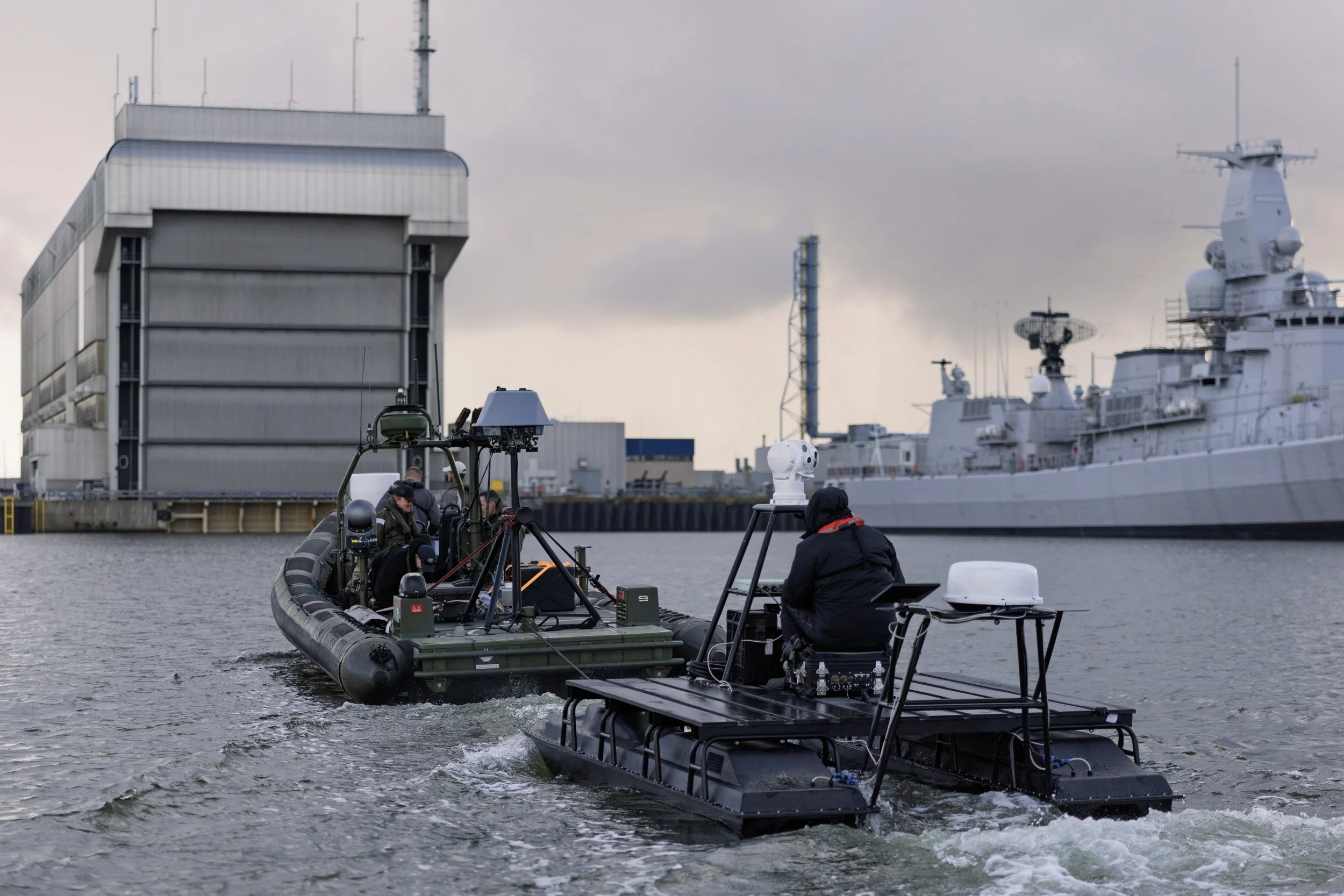
Image: BOMA maritime CUxS installations
Results
100% of all RF drones were detected by the DroneSentry-X Mk2 (Detect Only) from the maximum tested range of 4km. Bearings were accurate and used as the basis for slewing other sensors. Apart from one hangup in User Datagram Protocol (UDP) data that was successfully accounted for, the UDP stream from the DroneSentry-X Mk2 (Detect Only) worked flawlessly. Most drones were detected before takeoff, at ranges exceeding 4km.
The DroneSentry-X Mk2 (Detect Only) fixture (including improvised deployment configurations) remained stable throughout all scenarios. Initial briefings stated that detection runs would not exceed 10 knots, however, the vessel travelled in excess of 40 knots to reach the start point.
The DroneSentry-C2 Tactical provided a live data stream for detections throughout the exercise.
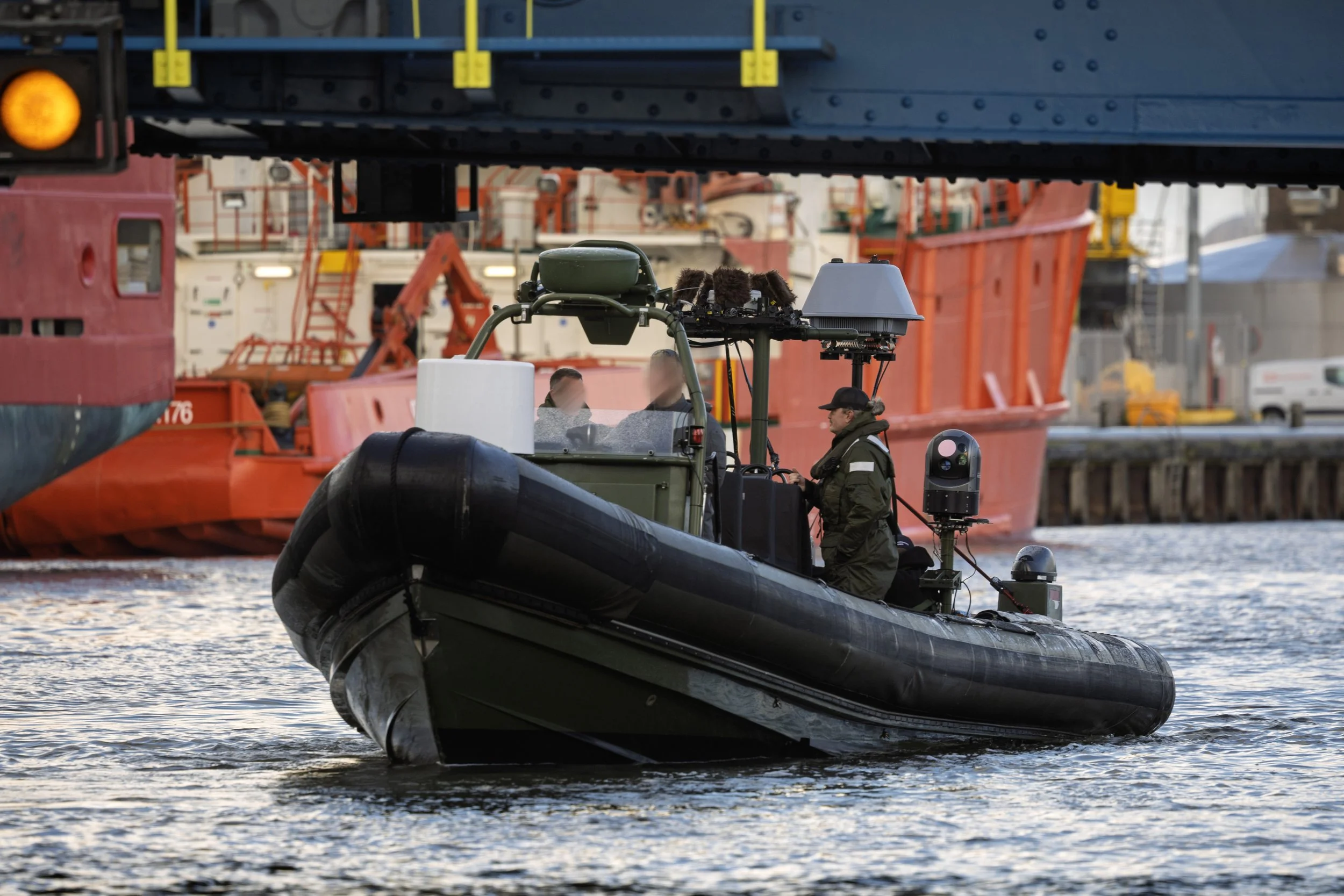
Image: DroneSentry-X Mk2 (Detect Only) as part of a maritime CUxS installation
System Deployment
DroneSentry-X Mk2 (Detect Only)
Capabilities:
Rugged, wide-area, software-defined detection solution
3km+ (1.86 miles) radio frequency (RF) detection range
Rationale and Advantages:
A rugged autonomous solution that is interoperable with other sensors for effective detect and defeat, with low cognitive burden
A system that can be set up in versatile environments to suit mission requirements
DroneSentry-C2 Tactical
Capabilities:
Lightweight deployment of DroneShield’s DroneSentry-C2 platform
Allows operators to manage sensor input across multiple devices
Rationale and Advantages:
Familiar tablet form factor for ease of use, allowing effective display of all detection data
A compact, rugged, and intuitive interface for agile deployment in multi-mission scenarios