

Airspace Security: An Interpretative Era Unfolds
From Detection to Understanding
Airspace security has entered a new era, moving from the realm of detection to interpretation. While the first generation of counter-drone solutions focused on detecting unmanned aircraft, the current security environment demands a new level of understanding. The critical question has moved from whether a drone can be detected to whether it can be understood within an operational context.
Unmanned aircraft are becoming ubiquitous in civil, commercial, and military airspace, and they are becoming increasingly autonomous, affordable, and accessible. Many operate below the level of concern, but remain a threat due to proximity, patterns, and potential for escalation. In this new environment, security teams must move beyond individual drone detections to airspace awareness.
While drone detection and drone classification are critical components of counter-UAS (CUAS) solutions, the new era of airspace security has been defined as interpretation. This means the ability to understand drone behavior over time, correlate drone patterns, and evaluate whether these patterns indicate routine, reconnaissance, rehearsal, or a potential threat.
With this, the interpretative era of airspace security has begun.
Airspace Security Redefined
For most of the last decade or so, counter-drone technologies have been built on the principle of visibility. The detection of a drone at an early stage gives operators an opportunity to understand what is happening and respond accordingly. While this principle remains relevant and necessary for many applications, today's airspace behaves differently.
Small drones operate with ambiguity that legacy technologies were never designed to resolve. They did not communicate with intent through predictable flight paths or recognizable signatures. A drone’s presence may be benign, probing, rehearsing, or operationally significant, but these differences are rarely apparent in a single detection. Meaning emerges only when multiple signals are analyzed through the lens of pattern, timing, and behavior. To understand these nuances, operators need technologies that not only detect but analyze the airspace as a system.
This is where detection remains essential, but understanding becomes decisive.
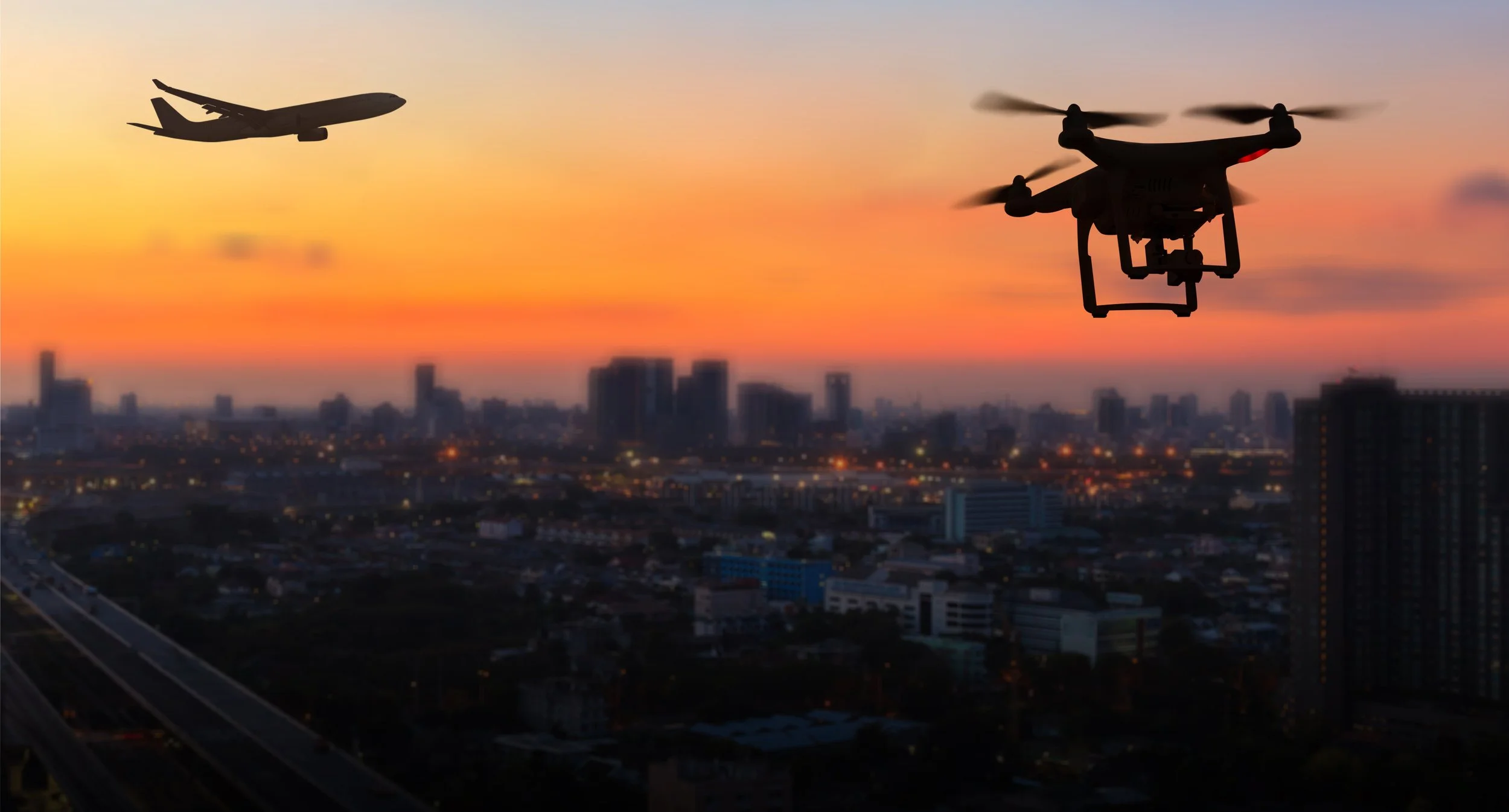
Image: Early detection gives operators time to respond effectively
Persistent and Layered Airspace Awareness
DroneShield’s work over the past decade has reflected this shift directly. Our solutions have been deployed across military operations, critical infrastructure, and national security environments worldwide. These environments taught an important truth: no single sensor is capable of describing modern airspace on its own. RF activity provides perspective, radar explains another, optical systems reveal nuances that electrical signals cannot. Different detection technologies offer unique views of the airspace, and each technology offers unique insights for operators.
When these sensing modalities are fused, a clearer and more accurate picture emerges. SensorFusion is not a technical aspiration, it’s the foundation of meaningful airspace security. It allows us to deliver one consistent operational picture, turning fragmented drone detections into coherent understanding.
In a high-tempo environment, clarity and confidence represent operational advantage.
Interpretation as a Mission Capability
Interpreting airspace activities is not a static capability. Threat behaviors change, unmanned aerial system platforms evolve, and tactics improve. Therefore, effective CUAS technology must be capable of learning, refinement, and evolution.
This necessity drove the creation of RfAI, DroneShield’s artificial intelligence technology for interpreting airspace activities. RfAI is based on more than a decade of operational data gathered across a wide variety of regions, climates, and mission sets. This enables consistent classification of known entities, recognition of new threats, and recognition of anomalies.
RfAI enables interpretation by providing a historical context. It enables a system to compare activities against known behaviors and refine its interpretation as new information becomes available. As autonomous drone threats become more complex, interpretation is becoming more important than simple detection.
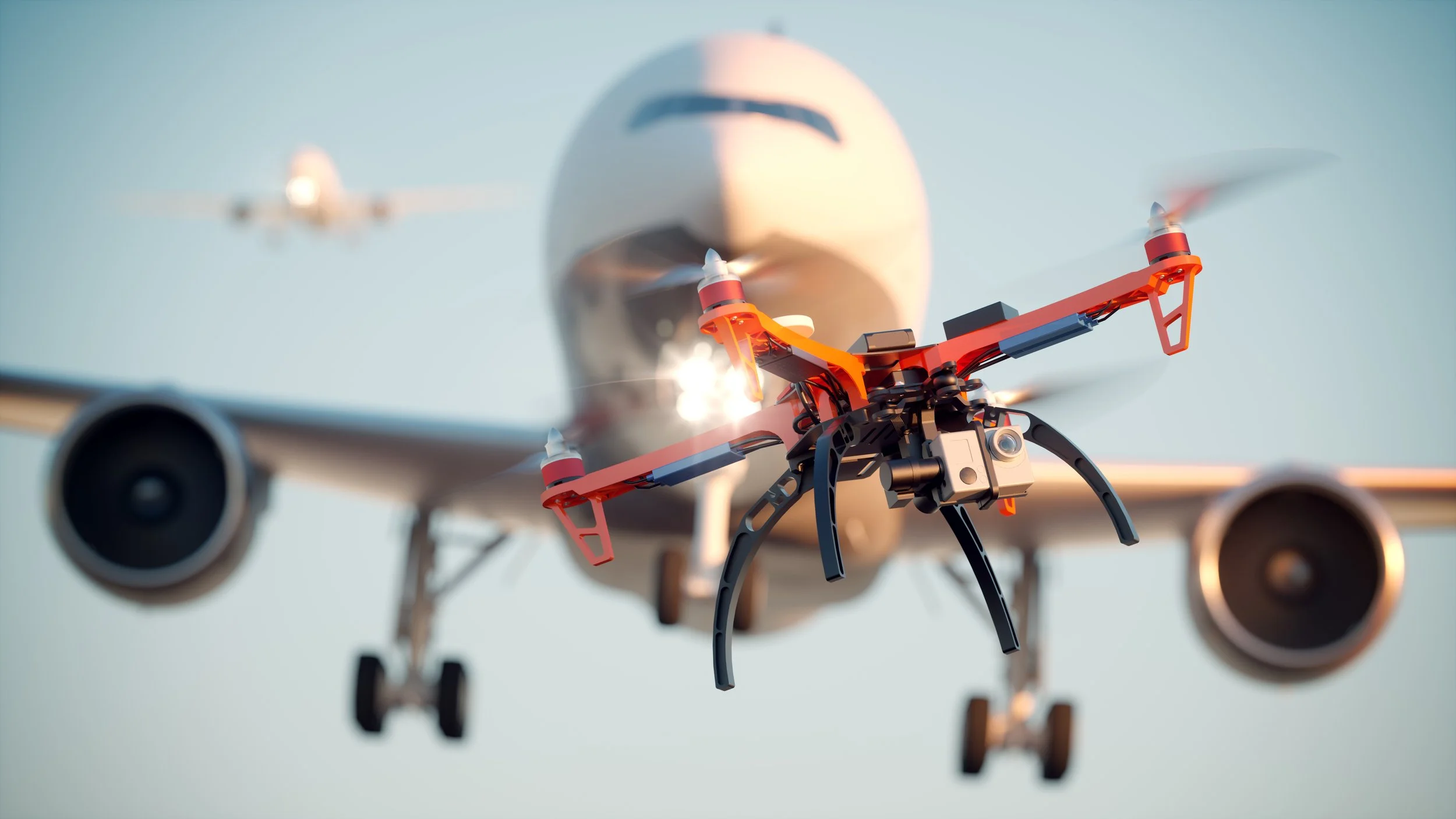
Image: Airspace security teams require timely and relevant information to make informed decisions
Supporting Decision Advantage
In a real-world operational environment, the objective of airspace security is not only data collection; it is decision advantage. Security teams require information that is timely, relevant, and meaningful to support decision-making.
DroneShield’s methodology is intended to support this goal. Detection, classification, SensorFusion, and RfAI are intended to work together to present airspace activity in a way that supports assessment, prioritization, and response. The end result is not more alarms but less uncertainty.
This methodology helps operators differentiate between normal airspace activity and airspace activity that requires attention. It helps with escalation management, reduces mental fatigue, and aids in more confident decision-making in situations where speed and precision are essential.
The Interpretative Era of CUAS
Airspace security is no longer characterized by individual incidents. It is characterized by the ability to understand the way in which airspace activity evolves over time, the way in which patterns change, and the way in which the behavior of airspace activity aligns with operational risk.
The interpretive era of CUAS is an era in which the systems used to address the problem must be capable of sustaining awareness, contextual understanding, and adaptation in response to the evolving threat environment. DroneShield’s CUAS technology is an era-capable solution for the complex airspace security challenge facing defense and security organizations around the world.
The future of airspace security is not characterized by systems that simply know something is happening. The future of airspace security is characterized by systems that understand what is happening. That is the future DroneShield is committed to creating.
Learn more about DroneShield’s RfAI and SensorFusionAI capabilities.